Faith, Community & Starting Again
Finding a Church After a Move
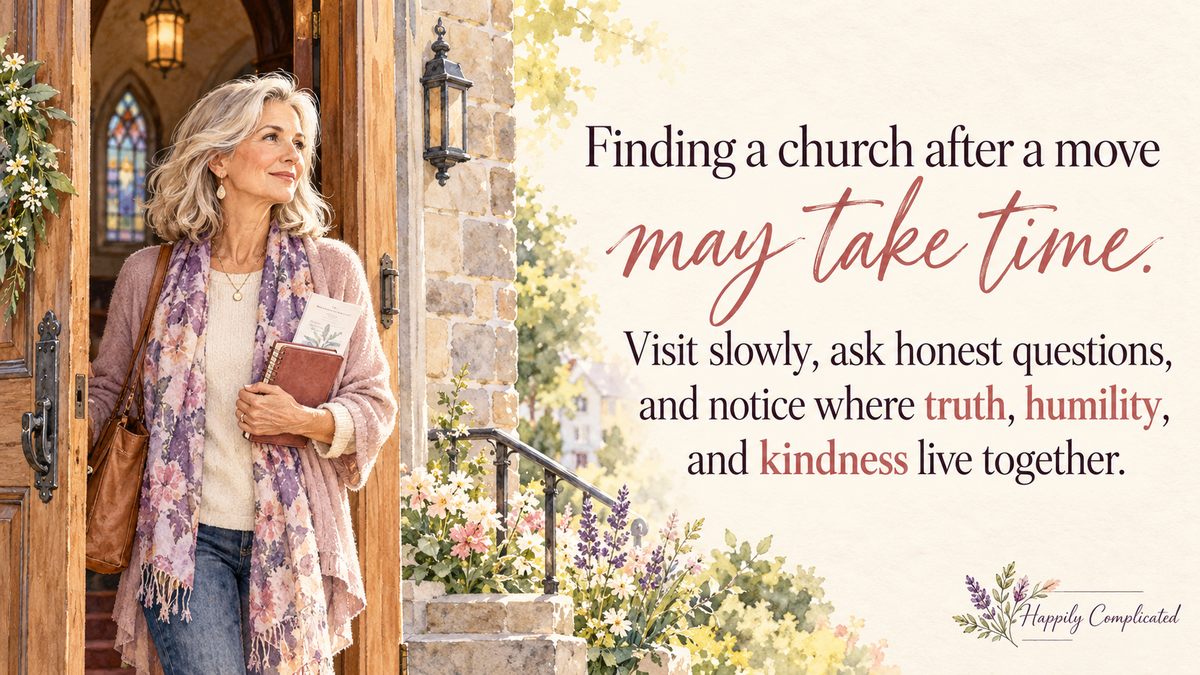
Finding a church after a move can take time. Honest questions and patient attention can help you notice where truth and kindness live together.
Moving rearranges more than boxes. You learn new roads, find a grocery store, transfer records, and try to remember where you packed the towels. Then Sunday comes, and the absence of your old church can feel especially clear.
Finding a new church is not like choosing the closest coffee shop. You are looking for a place where truth is taught, people are treated with care, and your ordinary life can become part of a community. That kind of trust may take time.
You are allowed to visit slowly, ask honest questions, and pay attention before calling a place home.
Begin with what matters most
Before searching, write down a few convictions that matter to your faith and family. Consider what the church teaches about Scripture, Jesus, salvation, prayer, service, leadership, and the dignity of people. If you are searching with a spouse or children, talk about those priorities together.
Keep the list focused. Preferences about music, building style, clothing, or program size can matter, but they should not carry the same weight as character and belief. A beautiful service cannot replace trustworthy teaching. A plain building does not mean a congregation lacks life.
You are not looking for perfection. You are trying to recognize a community where faith can be practiced honestly.
Notice character, not only polish
A first visit often shows what a church has prepared for guests. It may not show how people handle conflict, disappointment, weakness, or correction. Watch what happens beyond the platform.
Do leaders speak with humility? Are children, older adults, single people, people with disabilities, and those with less money treated as full members of the community? Can volunteers say no without being shamed? Are questions welcomed, or does every concern become a test of loyalty?
Pay attention to the tone of ordinary conversations. Kindness in a hallway may tell you as much as confidence from a microphone.
Ask honest questions
You can ask how leadership is structured, how money is handled, what safeguards protect children and vulnerable adults, and how the church responds when someone reports harm. Healthy leaders should be able to explain their processes without becoming defensive.
Ask what membership means and what is expected of members. Learn how the church serves its neighborhood and how women are included in the life of the congregation. If a theological issue matters deeply to you, ask directly rather than hoping it never becomes relevant.
No church will answer every question in one conversation. Still, clear answers and a willingness to continue talking can reveal humility.
Visit more than once when it feels safe
One Sunday can be unusual. The regular pastor may be away. A volunteer may be having a hard morning. The music may be different for a special service. If nothing feels unsafe or clearly concerning, visit again and notice what remains consistent.
Try a smaller gathering, class, or service opportunity where conversation is possible. You may learn whether people make room for newcomers without pressing for immediate commitment. You may also discover that a church that felt quiet at first becomes warmer through repeated contact.
If you encounter manipulation, secrecy, contempt, pressure to disclose private information, or excuses for harmful behavior, you do not owe the church more visits. Moving slowly includes the freedom to leave.
Let connection grow at a human pace
Even a healthy church may not feel like home immediately. Your previous community held years of shared meals, answered prayers, familiar faces, and difficult seasons. A new congregation cannot reproduce that history in a month.
Choose one manageable step. Learn a few names. Stay for coffee. Attend a class. Offer a skill without filling every open role. Friendship and belonging usually grow through small, repeated moments rather than one perfect welcome.
If you are lonely, tell one trustworthy person. People may assume you are settled because you appear capable. An honest sentence can open a door they did not know you needed.
God is present while you search
A church community matters, but God is not absent from the weeks when you have not found one. Pray at your kitchen table. Read Scripture. Stay in touch with wise believers who know your story. Let the search be thoughtful without making it fearful.
Ask God for discernment, patience, and courage to notice both good fruit and real concerns. You do not need to force certainty because another person wants a quick decision.
Finding a church after a move may take time. Visit slowly. Ask honest questions. Look for truth joined with humility and kindness. Home may grow quietly, one faithful relationship at a time.