Honest Faith
When Church Hurt Makes Trust Feel Unsafe
Being wounded by church people can make faith and community feel unsafe. Healing can be honest, careful, and rooted in God's character.
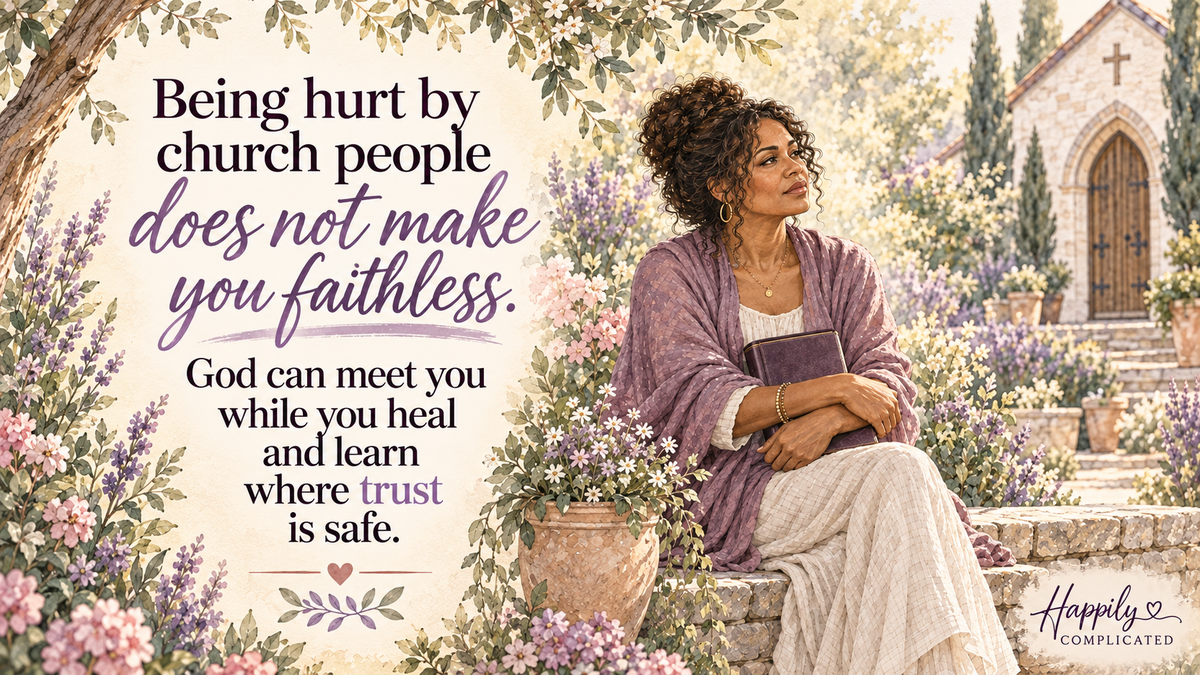
Church hurt carries a particular kind of weight. The place that taught you about grace may also be the place where someone used shame, control, gossip, silence, or spiritual language against you. When harm happens around prayer, worship, or Scripture, it can become difficult to separate the wound from the faith you once felt safe practicing.
You may still love God while feeling anxious about walking through a church door. You may miss community and also feel relieved when Sunday morning passes without anyone asking where you have been. Those mixed feelings do not make you faithless. They make you a person trying to understand what happened.
Harm does not become holy because it happened at church
Christians are called to forgive, tell the truth, protect the vulnerable, and practice humble leadership. Those commands should never be used to make an injured person stay silent. A harmful action does not become righteous because the person responsible had a title, quoted a verse, or said they meant well.
You are allowed to name what hurt. You can admit that trust was broken. You can recognize a pattern without turning every person into the person who wounded you. Truth is not an attack on the church. Honest truth can be part of how a church becomes healthier.
Healing does not require a quick return
People may encourage you to come back before you feel ready. They may worry that time away means you are drifting from God. But a rushed return can teach your heart that belonging matters more than safety. Healing often needs time, clear boundaries, and room to notice what trust now requires.
That may mean visiting a different congregation, attending online for a season, meeting privately with a wise pastor, or stepping away from a role that kept you close to the harm. It may also mean seeking support from a counselor, advocate, or trusted mature believer who will listen without protecting an institution at your expense.
God is not the person who failed you
Churches are meant to reflect God's love, but people do not always reflect Him faithfully. Their failure can distort the way you imagine God sees you. If someone used fear to control you, God may begin to feel controlling. If your questions were punished, you may assume God is offended by honesty.
Scripture gives us people who brought God anger, confusion, grief, and complaint. The Psalms do not hide wounded trust. God is not threatened by the truth of your experience. You can bring Him the part of you that still believes and the part that is afraid to hope again.
Let trust grow at the speed of truth
Safe trust is not built by inspiring words alone. It grows through consistent actions. Healthy leaders welcome reasonable questions. They admit mistakes. They respect limits. They do not demand private access, punish disagreement, or treat loyalty to them as loyalty to God.
Pay attention to how a community responds when someone says no, raises a concern, or needs help. Listen for humility, not only confidence. Notice whether care continues when there is nothing to gain. You do not need to ignore warning signs to prove that you have forgiven.
Faith can remain while you heal
Your relationship with God is not measured by how quickly you feel comfortable in a church building. Prayer at your kitchen table still matters. Reading one Psalm still matters. Sitting quietly with a safe friend still matters. Small acts of faith are not second-rate because they happen outside a crowded room.
You may eventually find a church community where truth and grace are practiced with care. You may need longer than other people understand. Do not let pressure write the timeline. Ask God for wisdom, stay near trustworthy people, and keep telling the truth.
Being hurt by church people does not make you faithless. God can meet you in the careful work of healing and help you recognize where trust is safe.