Relationships & Boundaries
You Do Not Have to Answer Right Away
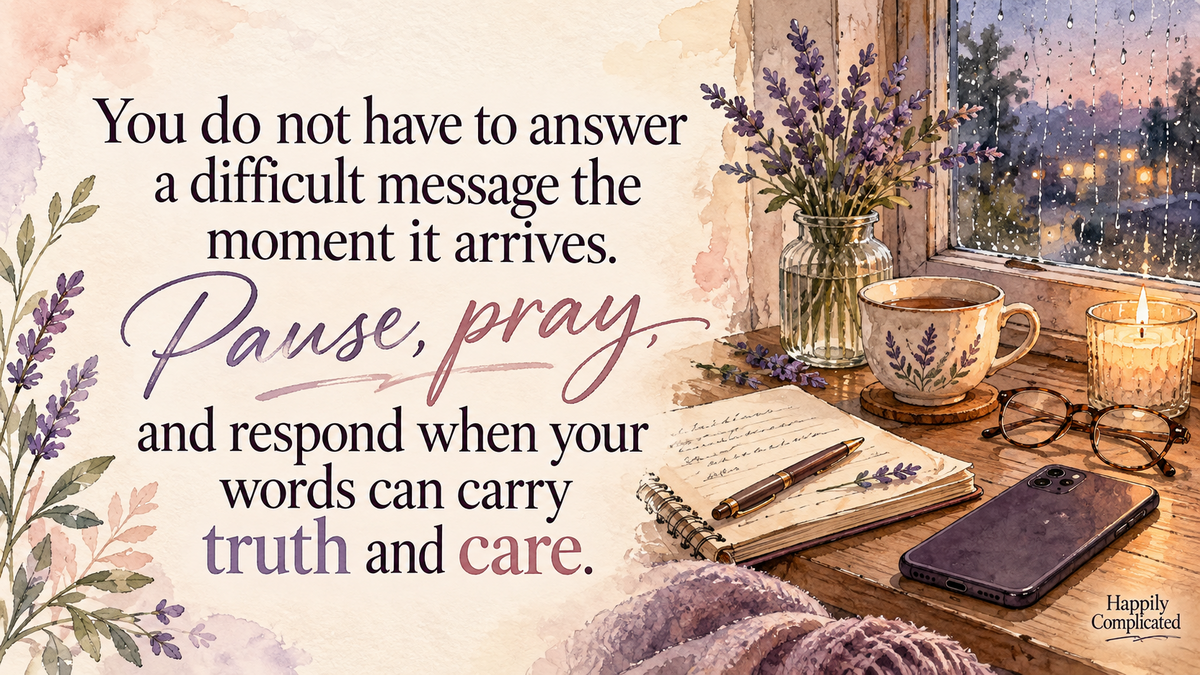
A difficult message can create false urgency. You can pause, pray, gather your thoughts, and respond when truth and care can share the same words.
A difficult message can change the temperature of an ordinary day. One moment you are making dinner, finishing work, or getting ready for bed. The next, a few words on a screen have pulled your whole mind into an argument you did not know was coming.
The phone makes everything feel immediate. You can see that the message was delivered. The other person may see that you read it. Your thoughts begin writing a response before your heart has caught up.
But urgency is not always wisdom. Unless someone is in danger or a true deadline requires an answer, you are allowed to pause. A thoughtful response can be more loving than a fast one.
Notice what the message stirred
Before answering, name what happened inside you. Did you feel accused, dismissed, embarrassed, or pressured? Are you afraid silence will look guilty? Do you want to correct every detail before the other person tells anyone else?
These feelings are not instructions. They are information. They can show you why the message matters and where your words might become sharper than you intend.
You do not have to shame yourself for the first response that came to mind. Just do not let the first response become the message you send.
Create a little space
Put the phone face-down. Take a drink of water. Step into another room. If the matter can wait, give yourself an hour or a night. Space does not mean you are avoiding the conversation. It means you are choosing not to have it from the most reactive part of yourself.
If the other person needs acknowledgment, a short sentence can protect the pause: ‘I received your message. I want to think before I respond.’ You do not need to explain your entire process or promise an answer by a time you cannot keep.
A boundary around timing can keep a hard conversation from becoming a rushed one.
Pray honestly, not impressively
Prayer in this moment may be simple: ‘Lord, help me tell the truth without trying to punish anyone.’ Ask God to show you what belongs in the response and what belongs in a private conversation with Him, a journal, or a trusted friend.
Not every feeling needs to be sent to the person who stirred it. Some feelings need care before they need an audience.
Prayer does not guarantee that you will feel calm immediately. It can still help you remember the kind of woman you want to be while the conflict is unresolved.
Decide what the response needs to do
A useful response has a purpose. Are you answering a question, correcting a false statement, setting a limit, apologizing for your part, or asking to speak by phone? Choose the purpose before choosing every sentence.
Keep the message shorter than the argument happening in your head. Address the main issue. Remove insults, guesses about motives, and old complaints that do not belong to this moment. If the subject is too important or complicated for text, say so clearly and suggest a better way to talk.
You can be kind without agreeing. You can be direct without becoming cruel. You can apologize for what is yours without accepting what is not.
Accept that care cannot control the reply
Even a careful response may be misunderstood. The other person may remain angry, answer unfairly, or demand more explanation. Wisdom is not measured by whether you can make every conversation end peacefully.
Your responsibility is to speak truthfully, choose a respectful tone, and keep the limits that are needed. Another person's reaction still belongs to her.
If the conversation becomes insulting, threatening, or endless, you may need to stop responding and seek support. Peace does not require constant access to you.
A difficult message does not get to command your whole evening. Pause. Pray. Decide what is true and necessary. Then respond when your words can carry both truth and care—or choose not to continue when continuing would only deepen harm.