Women's Health & Wellbeing
Women's Health Questions Deserve Serious Attention
New attention to women's health research is a useful reminder that women deserve careful study, clear answers, and respectful care through every stage of life.
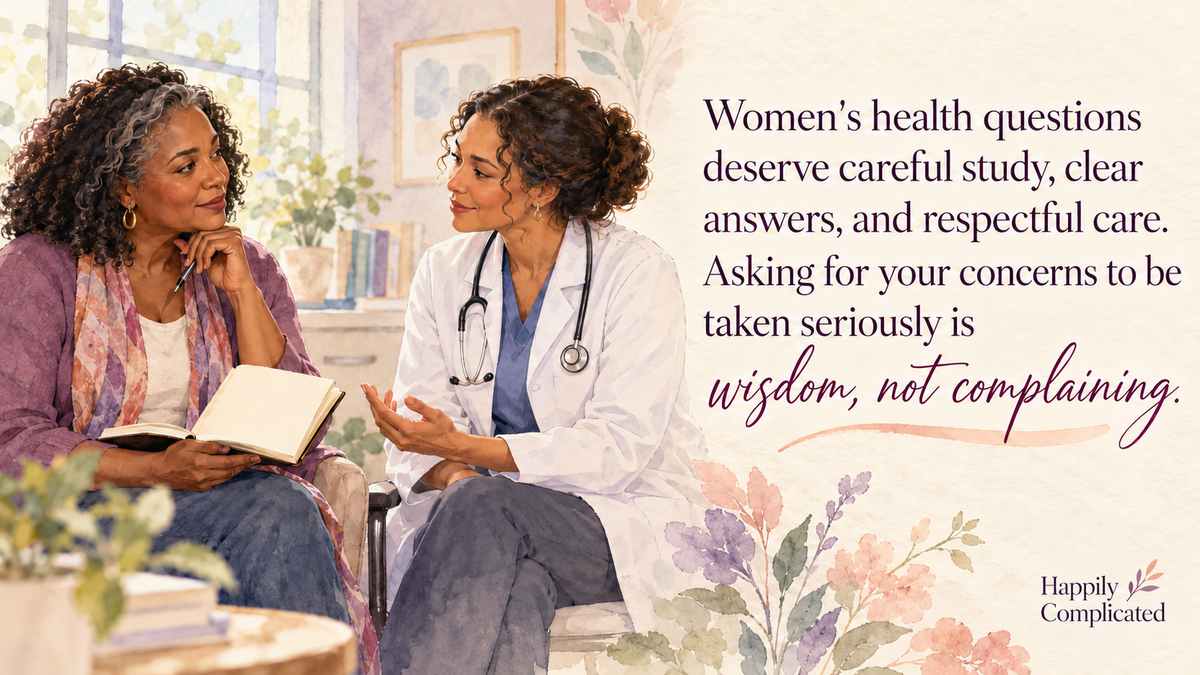
On October 19, the United States created a new Women's Health Division within the National Institutes of Health and a White House task force focused on women's health. The order calls for more coordinated research, prevention, diagnosis, and care across women's lives.
Policy announcements do not create better care by themselves. Research needs funding, careful work, skilled professionals, and follow-through. Still, the attention points toward something women have known for a long time: their health questions deserve serious study.
That public conversation also offers a personal reminder. Asking to be taken seriously is not complaining.
Bring the full story into the room
A health appointment can feel rushed, especially when several concerns have built up over time. Before you go, write down what you have noticed. Include when it began, how often it happens, what makes it better or worse, and how it affects daily life.
Bring a current list of medications, supplements, allergies, and recent changes if they are relevant. Choose the two or three questions that matter most so they do not disappear when the conversation moves quickly.
Clear notes do not prove that a symptom is caused by one particular condition. They give a qualified health professional better information to consider.
Ask for plain answers
Medical language can make an ordinary conversation feel uneven. It is reasonable to ask, 'What does that mean in plain language?' You can also ask what a test is looking for, what the next step may be, and when you should expect results.
If you do not understand the answer, ask again. Respectful care should leave room for questions. You are not wasting time by wanting to understand decisions about your own body.
A notebook can help. Write down instructions before leaving, or ask whether they can be included in your visit summary. If you feel overwhelmed, a trusted person may be able to attend with you when appropriate.
Notice when a concern is being minimized
Women sometimes leave an appointment wondering whether they explained themselves badly. A professional may have a sound reason for the advice given, but you still deserve to know how that conclusion was reached.
If a concern is dismissed without a clear explanation, calmly return to the impact. You might say, 'This is affecting my sleep and work. What possibilities have been considered, and what should I watch for next?'
You can request clarification or seek another qualified opinion when needed. That is not a promise that every answer will change. It is a reasonable step when important questions remain.
Research matters because women's lives are not one stage
Women's health includes much more than one age, diagnosis, or part of the body. Needs can change through menstruation, pregnancy, postpartum recovery, perimenopause, menopause, aging, chronic illness, and many other seasons.
Good research helps health professionals understand those differences instead of treating a man's body or a younger woman's body as the default for everyone. It can also help separate evidence from trends, fear, and unsupported claims.
As new findings appear, look for guidance from qualified professionals and reliable health organizations. A viral post can raise a question, but it should not become a diagnosis or treatment plan.
Care for your health without shame
Some women learned to endure discomfort quietly or put everyone else's needs first. Care may have been expensive, difficult to reach, or shaped by earlier experiences of not being believed.
You do not have to apologize for bringing a concern forward. Seek appropriate medical care when something feels wrong, and follow urgent-care guidance for severe or rapidly worsening symptoms.
Ask God for wisdom, courage, and steady support. Faith can live beside careful research, qualified care, and honest questions. Your health concerns deserve attention, and respectful care should make room for your voice.
This reflection was inspired by reporting from Reuters: U.S. order creates NIH division and task force for women's health.