Aging & Everyday Wisdom
When Your Body Needs More Recovery Than It Once Did
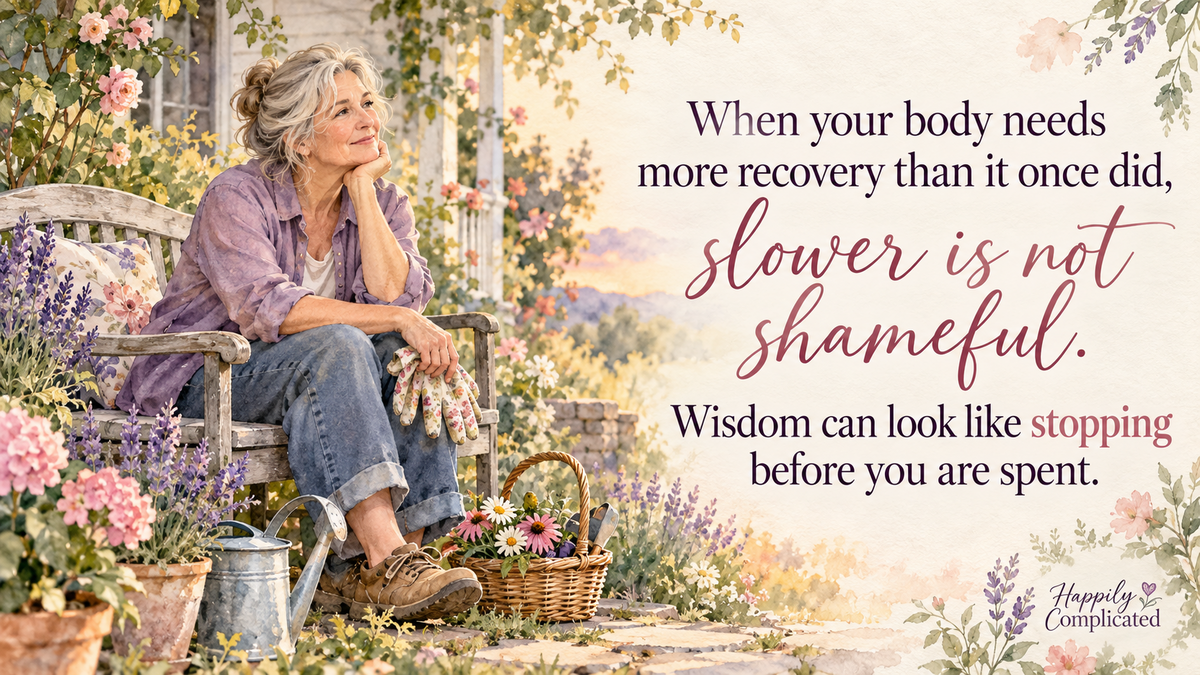
Needing more time to recover is not a moral failure. Wisdom may look like slowing down, stopping earlier, and honoring today's limits.
You finish a task that once felt ordinary, and your body asks for a longer pause. An afternoon of errands may take the rest of the evening to recover from. A busy weekend may still be present in your shoulders on Monday morning.
It can be frustrating when your mind remembers an old pace that your body no longer keeps. You may call yourself lazy, compare yourself with younger people, or push through because stopping feels like admitting defeat.
Needing more recovery is not a character flaw. Bodies change with age, stress, seasons, health, sleep, and the weight of ordinary life. You do not have to shame yourself into pretending otherwise.
Your old pace is not a permanent rule
Many women have spent years measuring a good day by how much they completed. You learned to keep going through tiredness because children needed you, work had deadlines, or other people depended on your strength.
That endurance may have served you in a hard season. It does not have to become a rule for every season. What was possible at forty may feel different at sixty. What was manageable before a loss, illness, stressful year, or major change may require more care now.
You are not betraying your former self by living at today's pace. You are paying attention to the life and body you actually have.
Stop before exhaustion makes the choice
Rest is easier to receive when you do not wait until you are completely spent. Try noticing the earlier signs. Your thoughts may become scattered. Your patience may shorten. Your body may feel heavy, tense, or unusually clumsy.
Instead of treating those signals as an enemy, let them become information. Finish one section of the task. Put away the tools. Drink water, eat, sit down, or move to something gentler. A short pause may help you protect the rest of the day.
This is not a promise that rest will fix every kind of fatigue. Ongoing or concerning changes deserve attention from a qualified health professional. Listening to your body can include asking for wise medical care instead of guessing or dismissing what you notice.
Plan for recovery as part of the task
Recovery is not extra time you failed to avoid. It can be part of the plan. If an appointment, family gathering, trip, or day of yard work takes energy, leave room around it when you can.
You might prepare a simple meal ahead of time, decline another commitment, share the driving, sit during part of the work, or ask someone else to carry the heaviest piece. Small adjustments can protect what matters without requiring you to prove how much discomfort you can ignore.
Some people may not understand. They may remember what you used to do or assume that a quiet day means you are available. Clear words can help: 'I need tomorrow to recover,' or, 'I can help for an hour, but I cannot stay all day.'
Slower can still be faithful
Faithfulness is not the same as constant motion. Jesus welcomed tired people and made room for rest. You do not need to turn that truth into another standard you must practice perfectly. Simply let it challenge the belief that God is pleased only when you are useful.
A slower day can still hold prayer, kindness, attention, and purpose. You may encourage someone from a chair, enjoy the garden without finishing every bed, or leave a task for another morning. Meaning does not disappear when speed does.
Ask God for wisdom rather than pressure. 'Lord, help me notice my limits without fear. Show me what matters today, and give me peace about what can wait.'
Treat your body as a companion, not an opponent
Your body has carried you through work, love, grief, laughter, caregiving, and change. It may not move through this season exactly as it once did. That does not make it an enemy.
Offer it the same patience you would give someone you love. Choose a realistic pace. Seek help when something feels wrong. Receive the good moments without using them to demand more than the day can hold.
Slower is not shameful. Wisdom may look like stopping before you are spent, leaving something unfinished, and trusting that your worth remains steady when your energy does not.