Change & Identity
When You Miss the Woman You Used to Be
You can honor the woman you were before life changed without treating your present self like a disappointment.
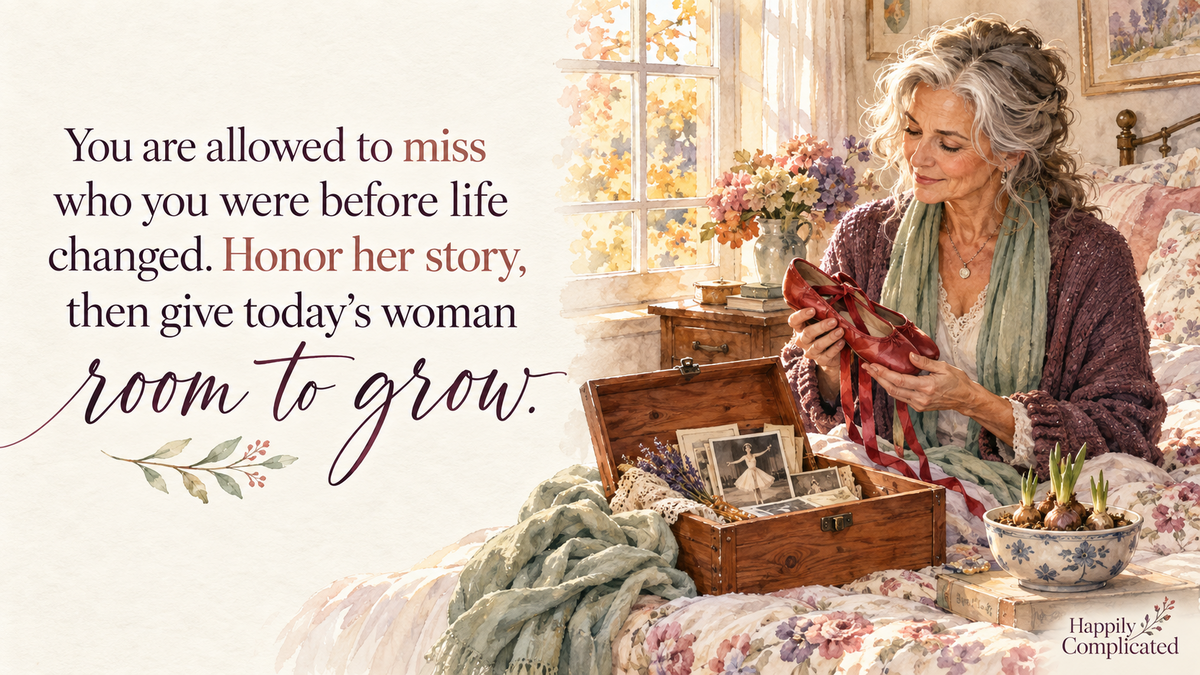
An old photograph can surprise you. You may recognize the face, the room, and the people beside you, yet feel far away from the woman you were then.
Maybe she had more energy. Maybe her children still lived at home. Maybe she moved through the world with fewer worries, a different body, a marriage that had not changed, or work that gave her a familiar place to stand.
Missing her does not mean you are ungrateful for your life now. It means change has a cost, even when parts of the new season are good.
Change can create a quiet kind of grief
We usually connect grief with death, but other changes can leave an empty space too. A move, illness, divorce, retirement, caregiving season, friendship change, or grown child's departure can divide life into before and after.
People may expect you to adjust quickly. They may point to what you gained or remind you that others have harder stories. Gratitude can be helpful, but it should not be used to silence loss.
You can thank God for what remains and still name what has gone. Honest grief and gratitude can sit beside each other without canceling each other out.
Remember her with kindness
When you think about your former self, it is easy to remember only her strengths. Memory softens some details and sharpens others. The woman you miss also had fears, unfinished work, lonely days, and questions she could not answer.
Honor the whole woman. Notice the courage she practiced and the mistakes that taught her. Thank God for the people, skills, and ordinary joys that shaped her. Let photographs, music, recipes, or keepsakes hold the story without demanding that you recreate it.
You do not need to criticize who you were in order to grow. You also do not need to idealize the past in order to respect it.
Stop asking today's woman to perform yesterday's life
Your current body, schedule, responsibilities, and hopes may be different. If you measure every day against an earlier season, the present will always seem smaller. A life cannot move forward while being graded by conditions that no longer exist.
Ask a gentler question: What is possible and meaningful now? The answer may be modest. A slower walk. A new way to serve. A friendship with more honesty. A creative interest that belongs only to you. A home rhythm that fits the energy you actually have.
This is not giving up. It is offering today's woman the same compassion you wish you could give the younger one in the photograph.
Some parts of you may feel unfamiliar because they are still being formed. You are learning what strength looks like with new limits, new knowledge, and a different view of what makes a day worthwhile.
Let growth take a new shape
Growth does not always look like adding more. Sometimes it looks like becoming clearer about what matters. It may mean releasing an old expectation, asking for help, learning a new limit, or speaking with a steadiness you did not have years ago.
God has not discarded the chapters that came before. The love, courage, knowledge, and faith formed there can travel with you. But they do not have to keep you trapped in an old version of your life.
Give yourself time to learn this season. Try one new rhythm without demanding that it replace everything you lost. Let joy return in its present form instead of insisting that it wear an old face.
You are allowed to miss who you were before life changed. Honor her story with tenderness. Then give today's woman room to grow into a life that is honest about what changed and open to the good that may still be forming.