Wisdom & Decisions
When You Are Afraid of Making the Wrong Decision
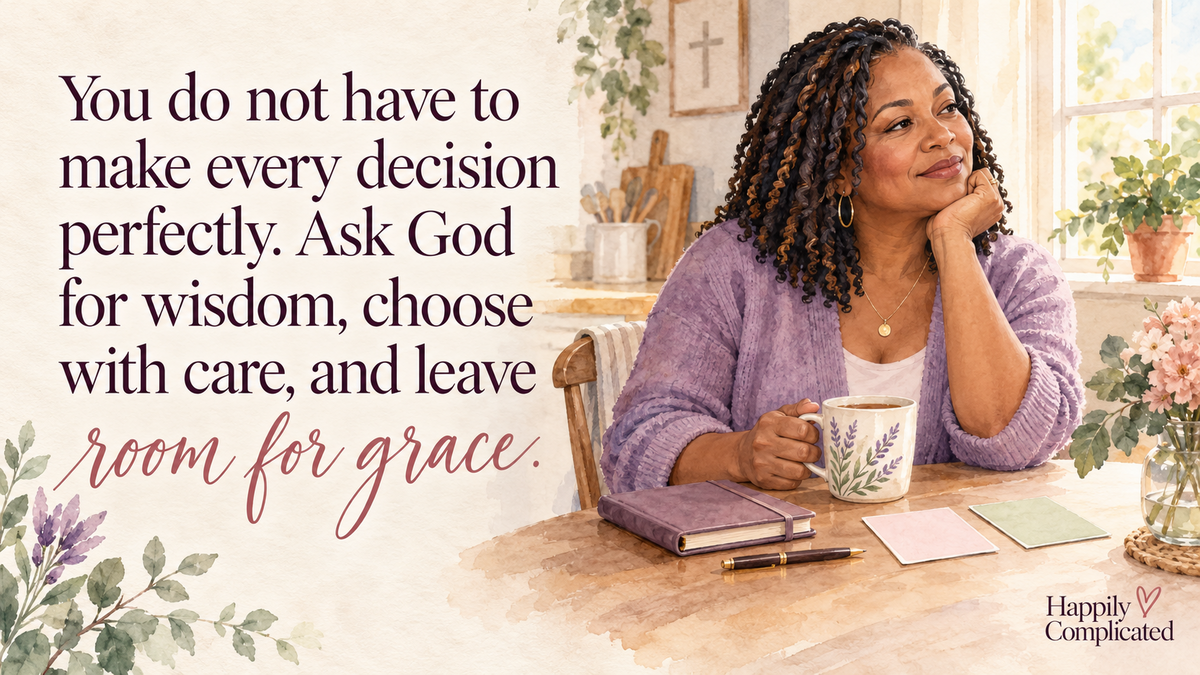
Wisdom does not always remove uncertainty. You can gather what you know, pray honestly, choose with care, and leave room for grace.
Some decisions arrive quietly. You choose a meal, answer a message, or move one task to tomorrow. Other decisions seem to fill the whole room. A job offer, a family concern, a move, a relationship, or a money choice can make every option feel heavy.
You may pray, gather advice, and still wish someone would simply tell you which door is right. The fear is not only that the choice will be difficult. It is that one wrong decision could prove you were careless, faithless, or unable to hear God.
That is a painful amount of pressure to place on one human choice.
Wisdom is not the same as certainty
We often imagine that a wise decision should feel completely clear. Sometimes it does. Often, it does not. Two options may both contain good and difficult parts. Important facts may remain unknown. Other people may give sincere but conflicting advice.
James 1:5 encourages believers to ask God for wisdom. Wisdom helps us live faithfully with what we know. It does not always give us advance knowledge of every outcome.
You can make a careful choice while still feeling nervous. Uncertainty does not automatically mean you missed God's direction. It may simply mean you are making a real decision in a complicated life.
Gather what is yours to know
Prayer matters, and so does honest information. Write down what you know for certain. Separate facts from fears, assumptions, and the worst ending your mind has imagined.
Consider the practical questions. What will this choice cost in time, money, energy, or trust? Who will be affected? What responsibility belongs to you, and what are you trying to control that is not yours? Is there a deadline, or are you rushing because waiting feels uncomfortable?
Wise counsel can help. Choose people who understand the situation, tell the truth kindly, and do not need you to make the same choice they would make. Advice should help you see more clearly, not replace your responsibility to decide.
Notice what is driving the choice
A decision may look responsible while being driven by fear. You may want to keep everyone pleased, avoid an awkward conversation, prove your worth, or escape discomfort as quickly as possible.
Ask yourself what value you want the choice to reflect. Honesty? Stewardship? Safety? Compassion? A reasonable boundary? Loyalty that does not require self-betrayal? Naming the value can bring order when emotions are loud.
This does not mean feelings are useless. Fear may reveal a real risk. Relief may show that a burden has become too heavy. Pay attention to emotion without asking it to make the whole decision alone.
Choose without demanding perfection
At some point, more thinking stops bringing more wisdom. You circle the same facts, ask the same people, and search for a feeling of certainty that may never arrive.
When you have prayed, gathered what you can, and considered the likely effects, it may be time to choose. Make the best decision you can with humility. You are allowed to say, “This is what seems wisest with what I know today.”
That sentence leaves room for confidence and correction. It does not pretend you can see the future. It also refuses to remain frozen simply because the future is hidden.
Leave room for grace afterward
A good decision can still lead to a hard season. A choice that seemed wise may later need adjustment. Difficulty alone does not prove you chose badly, and changing course does not always mean you failed.
If new information appears, respond to it. If you make a mistake, take responsibility and repair what you can. If the choice cannot be undone, ask God for help living faithfully from where you are now.
You do not have to predict every outcome to be a responsible woman. Ask for wisdom. Choose with care. Then leave enough room for grace to meet the imperfect person making the decision.