Marriage & Life Transitions
When Retirement Changes Your Marriage
Retirement can reshape privacy, chores, money conversations, and time together. A good marriage may still need patience while both people learn a new daily rhythm.
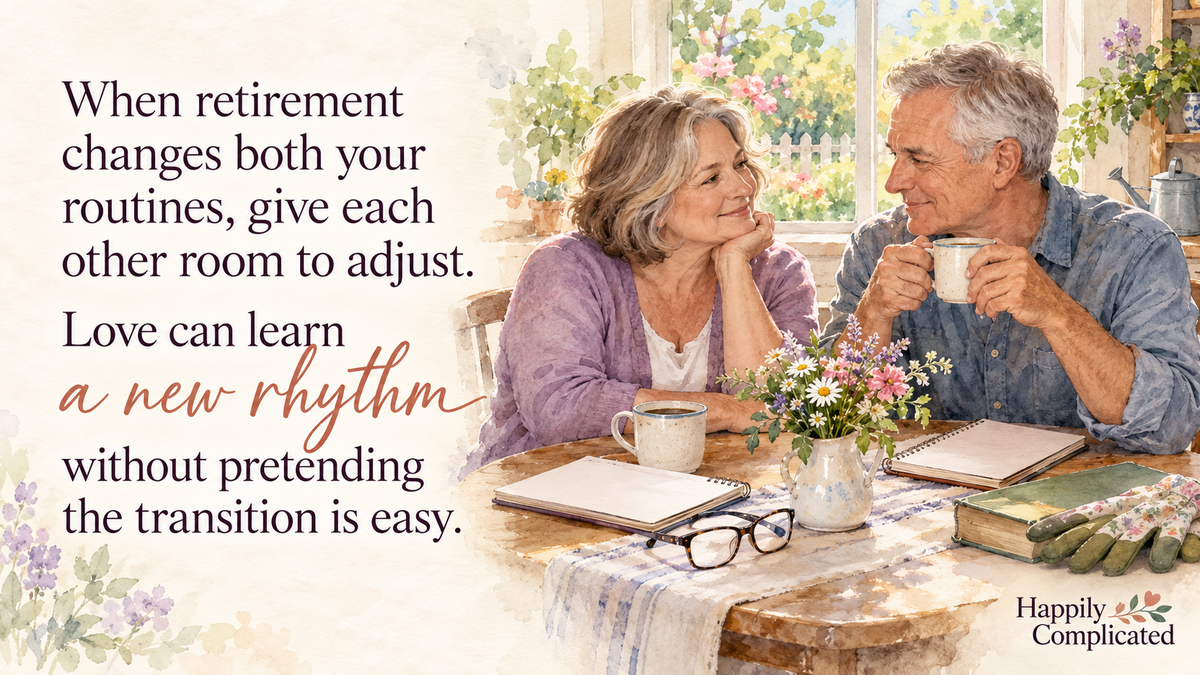
Retirement is often described as one long-awaited exhale. No commute. No early alarm. More time for travel, family, hobbies, or slow mornings together. Those gifts can be real. So can the strange feeling of having your shared life rearranged almost overnight.
A couple who managed different schedules for years may suddenly be home at the same time, every day. The house feels different. Privacy changes. Chores that once belonged to one person become open for discussion. Money may need more careful attention. Even a strong marriage can feel unsettled while both people learn what this season asks of them.
Difficulty adjusting does not mean the marriage is failing. It means a familiar system changed, and love now needs a new rhythm.
Retirement changes more than a calendar
Work often gives a day its shape. It provides tasks, conversation, recognition, and a reason to leave the house. When that structure disappears, the loss can reach deeper than expected. A person may miss colleagues, usefulness, independence, or the simple knowledge of what comes next.
The spouse who was already home may experience a loss too. A quiet house, personal routine, or way of managing the day can suddenly feel crowded or observed. Neither person has to be wrong for the transition to feel awkward.
Try to name what changed without turning the other person into the problem. ‘I miss having a few quiet hours in the morning’ is more useful than ‘You are always in my way.’ ‘I am struggling to know what my day is for’ opens a different conversation than irritation about small household habits.
Talk about the ordinary details
Couples sometimes discuss the large retirement questions and skip the small ones that shape daily peace. Who needs time alone? Which chores should change? How much can be spent without checking in? What time feels reasonable for errands, television, exercise, or visitors?
These details may not sound romantic, but clear expectations can protect tenderness. Do not assume decades of marriage should make both of you mind readers. The routines that worked during employment were built for a different season.
Choose a calm time to talk, not the moment when annoyance is already high. Be specific. Listen for the need underneath the complaint. Then try one small change for a week or two instead of demanding a perfect plan for the rest of your lives.
Togetherness does not require constant closeness
More time together is not always better time together. Healthy closeness can include separate interests, friendships, rooms, or hours of the day. One person may want a full calendar while the other needs slower mornings. One may enjoy gardening while the other reads, volunteers, or meets a friend.
Giving each other space is not rejection. It can help each person return to the relationship with something to share. A marriage does not become less loving because two people stop expecting one another to fill every open hour.
Keep a few shared rituals too. Coffee at the table, an evening walk, a weekly meal out, or prayer before bed can give the relationship a gentle point of connection while new individual routines take shape.
Be honest about money and identity
Retirement can make financial choices feel more serious. Even when a couple planned carefully, moving from earning to drawing from savings or fixed income can stir fear. Avoiding the subject usually gives anxiety more room.
Look at the numbers together. Agree on what needs discussion and what each person can manage independently. If the choices feel confusing, seek qualified financial guidance rather than asking worry to lead the conversation.
Also make room for questions of identity. A job title may have carried pride, community, or purpose. Its absence can leave a person feeling less visible. Remind each other that usefulness is larger than employment. Purpose can continue through relationships, service, learning, creativity, rest, and ordinary faithfulness.
Let the new rhythm grow slowly
You may have imagined that retirement would solve old tensions. More free time does not automatically heal communication, loneliness, or resentment. Those concerns still deserve honest care. A trusted counselor or pastor can help when the same conflict repeats and neither person knows how to move it forward.
At the same time, do not judge the whole season by its first months. New rhythms are learned through conversation, adjustment, mistakes, apologies, and patience. What feels clumsy now may become familiar with time.
Ask God for gentleness as you learn each other again. The person across the table is also leaving something known and entering something new. Love can make room for both gratitude and uncertainty.
When retirement changes both your routines, give each other room to adjust. You do not have to pretend the transition is easy for this chapter to become honest, companionable, and good.