Identity, Dignity & Courage
When People Mispronounce Your Name
Correcting the pronunciation of your name is not rude. Calm clarity can protect dignity and help relationships begin with care.
A name can hold family, language, faith, history, and the hopes of the people who chose it. It may connect you to a grandmother, a homeland, or a story that began long before you entered the room.
That is why repeated mispronunciation can sting. The mistake may be unintentional, yet you may still feel reduced to the easiest sound another person is willing to make. You might smile, accept a nickname you never chose, or decide that correcting someone would make you seem demanding.
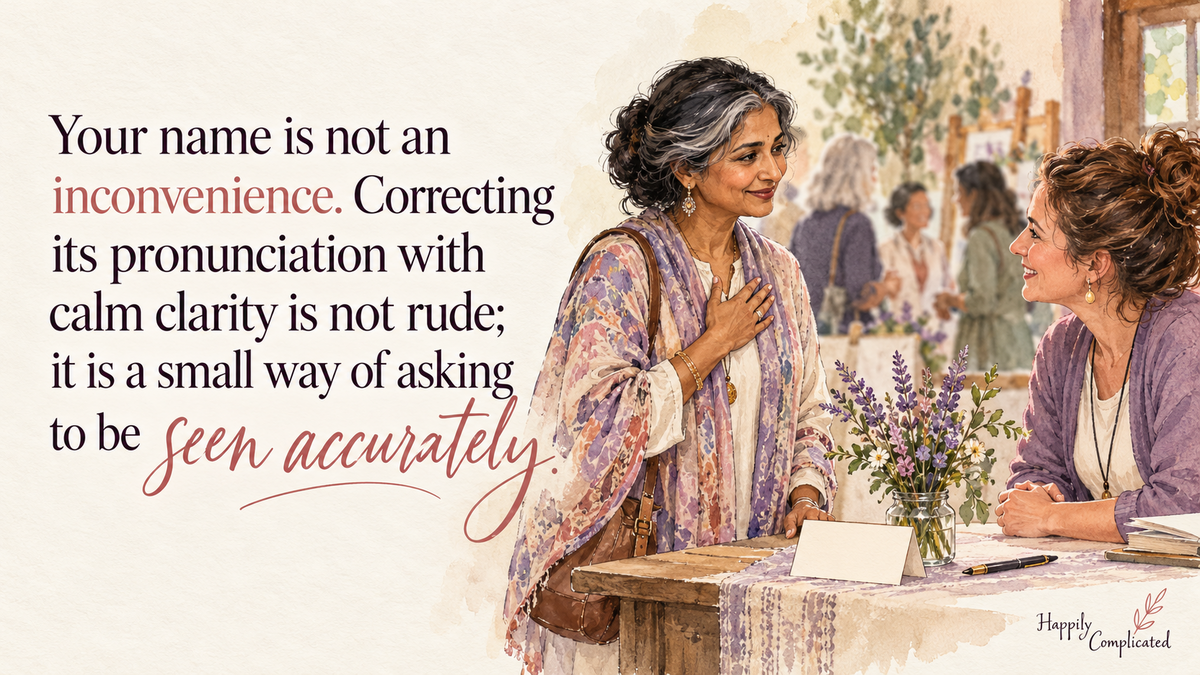
Your name is not an inconvenience. Calmly helping someone say it is a reasonable way of asking to be seen accurately.
Why a name can feel so personal
Some people learn early that their names will be treated as difficult. Teachers pause at attendance. Coworkers shorten the name without asking. Church members avoid saying it because they are afraid of making a mistake. Over time, one small moment can become a familiar message: other people's comfort matters more than your full identity.
A name is not the whole of who you are, but it is often the first part of you offered in a relationship. Saying it with care communicates attention. Refusing to try communicates something too.
You do not need to decide that every mistake is disrespect. New sounds take practice, and kind people can stumble. The better question is whether the person listens and tries after being corrected.
Correct it simply
You do not need a speech or an apology. Try, 'It is pronounced Meera, with the first sound like mirror,' or, 'I go by my full name, Marisol.' Say it slowly once, then repeat it if needed.
If you are introduced incorrectly in a group, a brief correction can be enough: 'Thank you. My name is actually pronounced...' Then continue with the conversation. Calm clarity is not unkind. It gives the other person useful information without turning the moment into a public trial.
You are allowed to decide how much energy you have for correction on a given day. Choosing not to address every stranger is not weakness. Correcting someone important to your daily life is not oversensitivity.
When the mistake keeps happening
Repeated mispronunciation after several corrections deserves a clearer conversation. You might say, 'I know the pronunciation may be unfamiliar, but it matters to me that my name is said correctly. Would you practice it with me now?'
At work, consider sending the phonetic spelling in an email or adding a pronunciation guide to your profile when that feels useful. If a colleague continues to mock, rename, or dismiss you, write down specific incidents and use the appropriate workplace process. A pattern of disrespect should not be explained away as a harmless mistake.
In family or church settings, the same steady boundary can apply. You can be gracious without accepting a nickname you did not choose. Familiarity does not give another person ownership over your name.
Offer others the care you hope to receive
Dignity works in both directions. When you meet someone whose name is new to you, ask rather than guess repeatedly. Listen closely. Say it back. If you forget, ask again without making the person comfort you for the mistake.
Avoid saying that a name is too hard or unusual. What feels unfamiliar to you may be ordinary and beloved in another family or culture. A few sincere seconds of practice can make a room feel more welcoming.
Teach children the same habit. Let them see that learning a person's name is not a performance of perfection. It is a practice of attention.
You are fully known by God
Human beings will sometimes misunderstand us, including the words we use to introduce ourselves. Christian hope does not require pretending those moments never hurt. It reminds us that our identity is not finally held by another person's accuracy or approval.
God knows you completely. Bring Him the weariness of having to explain, the anger that comes with being dismissed, and the courage needed for the next conversation.
Then say your name without shrinking. Correct it with calm clarity. Receive sincere effort with grace, and let repeated carelessness meet an honest boundary. Asking to be seen accurately is not rude. It is a small, human request for respect.