Grief & Hope
When Joy Returns After Loss
A good moment does not erase grief or betray what you loved. Joy and sorrow can share the same heart.
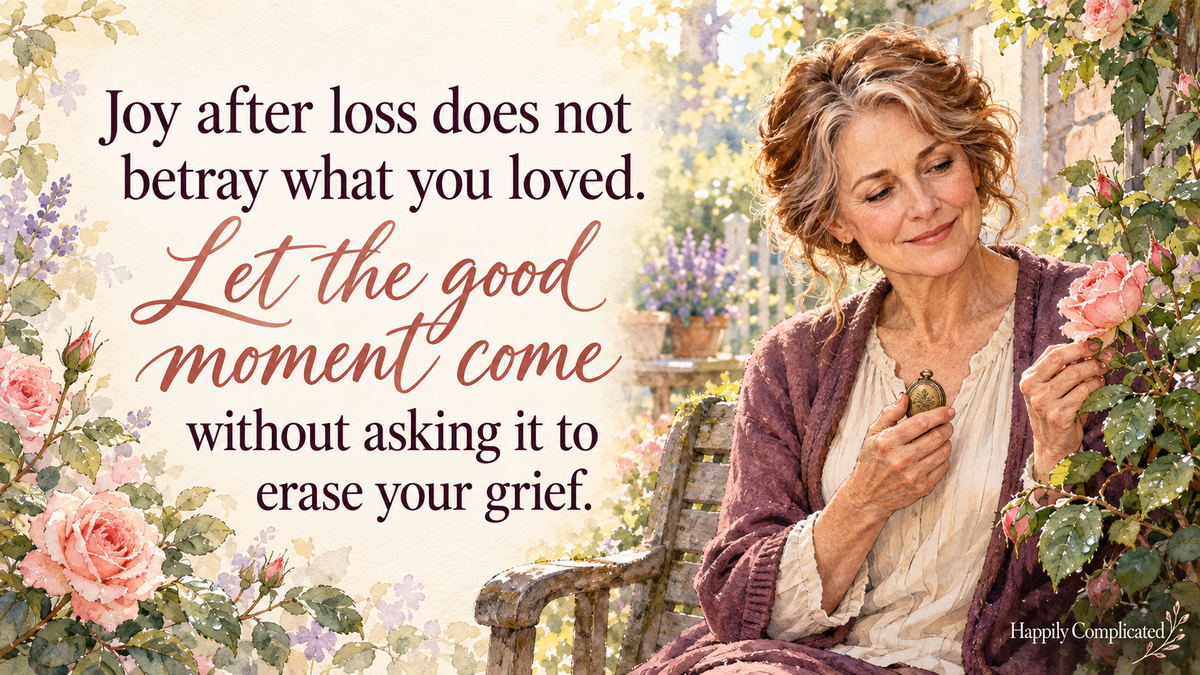
Grief can make the first good moment feel confusing. You laugh at a story, enjoy a meal, notice a beautiful morning, or realize you have gone an hour without thinking about what happened. Then guilt moves in.
How can you feel happy when someone is gone, a relationship has ended, or the life you expected has changed? Part of you may fear that joy means you are forgetting. You may feel as if love requires you to remain sad enough to prove the loss still matters.
But joy after loss is not betrayal. The heart can remember what hurt and still receive what is good now.
Grief does not move in one direction
We often picture grief as a path that slowly rises from pain toward peace. Real grief rarely behaves that neatly. A gentle week can be followed by a difficult morning. A song, date, smell, or familiar place can bring an old ache close again.
The return of sorrow does not mean you have lost all progress. The return of laughter does not mean the sorrow was shallow. Both responses belong to a person learning how to live with something she did not choose.
You do not need to decide which feeling is the true one. They can both tell the truth.
A good moment does not erase love
Love is not measured by how continuously you hurt. You do not honor a person by refusing every pleasure. You do not prove that a season mattered by making the rest of your life small.
The person you miss may still shape the way you cook, pray, laugh, welcome people, or notice small things. A relationship can remain part of your story even as your days begin to hold new experiences.
Memory is not kept alive only through tears. It can also live in gratitude, stories, traditions, and the kindness you learned from someone who mattered.
Let joy be small and ordinary
Joy may not arrive as a dramatic turning point. It may be warm bread, a dog sleeping in a patch of sun, a friend who makes you laugh, or a flower opening after rain.
Receive the moment without demanding that it heal everything. A pleasant afternoon does not need to become proof that grief is over. It can simply be one pleasant afternoon.
This takes pressure off joy. You do not have to force yourself to feel grateful all day. You only need permission to notice the good that is actually present.
Do not punish yourself for healing
Some women become watchful when life begins to feel lighter. They expect another loss, question their loyalty, or create reasons not to enjoy what is in front of them.
If that happens, answer the guilt gently. Say what is true: I still love. I still remember. I am also allowed to live this day.
Healing does not remove the past. It changes how the past is carried. The loss may always matter without remaining the only thing that matters.
Make room for the difficult return
Receiving joy does not promise that every day will now feel easier. Birthdays, holidays, family changes, and ordinary reminders may reopen grief. Let that be human rather than shameful.
Ask for company when you need it. Tell a trusted person when an anniversary will be hard. Seek wise pastoral or professional support if grief is making daily life feel impossible to carry alone.
You do not have to rush toward happiness, and you do not have to push it away when it comes. God can meet you in the tears and in the laughter that surprises you.
Let the good moment come
The heart is large enough to hold sorrow and delight, memory and change, longing and gratitude. One does not cancel the other.
Let yourself enjoy the meal, the joke, the garden, the quiet room, or the person beside you. You are not leaving love behind. You are allowing life to become wider than the loss.
Joy after loss does not betray what you loved. Let the good moment come without asking it to erase your grief.