Family & Boundaries
When Family Traditions Become Too Much to Carry
Traditions can connect a family, but one woman should not have to carry every detail alone. Simplifying can preserve meaning while making room for peace.
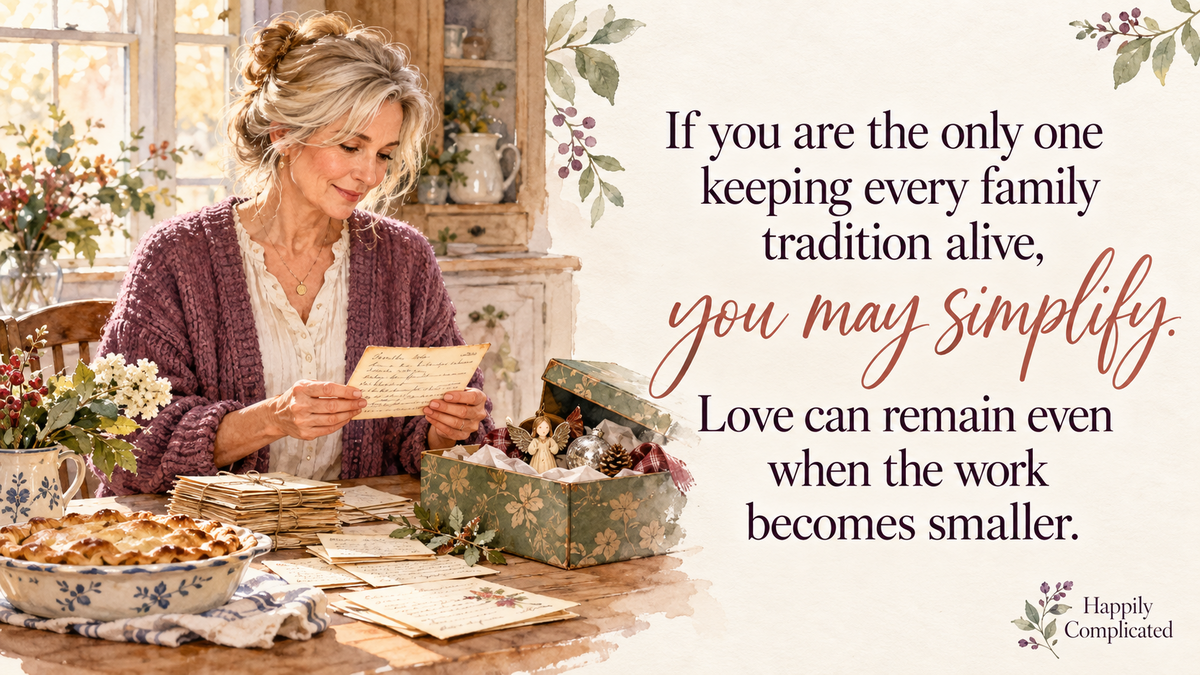
Family traditions can carry beautiful memories. A certain recipe tastes like your grandmother’s kitchen. A familiar tablecloth brings back years of noisy meals. The same song, decoration, birthday cake, or Sunday dish helps everyone remember where they belong.
But traditions also require work. Someone finds the recipe, buys the food, cleans the house, sends the invitations, remembers the dates, and notices which small detail will matter to whom. In many families, that someone is one woman who has been doing it so faithfully that everyone else thinks the day simply happens.
When the work becomes too heavy, simplifying is not the same as failing. Love can remain even when the gathering changes.
Notice what you are actually carrying
A tradition may look like one meal from the outside. From your side, it may include planning, shopping, cooking, hosting, cleaning, managing personalities, and recovering afterward. You may also be working, caring for a parent, watching grandchildren, living with pain, or trying to protect a tighter budget.
Name the full task instead of judging yourself for feeling tired. Weariness is not proof that you care less than you used to. It may simply mean the tradition grew while your time, energy, money, or household changed.
Ask what part feels meaningful and what part feels like performance. The family recipe may matter. Matching decorations may not. Gathering around one table may matter. Serving six homemade dishes may not. Clarity helps you protect the heart of the tradition without protecting every detail.
Let other adults share the work
If the tradition belongs to the family, the work can belong to the family too. Ask someone to bring the main dish, make the calls, choose the date, host this year, drive an older relative, or clean the kitchen afterward. Make the request specific enough that people know what taking responsibility means.
Some relatives may offer to ‘help’ while still expecting you to lead every decision. You can answer kindly and clearly: ‘I can host if everyone brings a dish,’ or ‘I am not able to organize the whole day this year. Who would like to take it?’
Then allow another person to do the job differently. The pie may come from a bakery. The decorations may be simple. Dinner may begin later than you would choose. Shared responsibility requires releasing control as well as releasing labor.
Choose connection over a perfect picture
Traditions can quietly become a stage where one person tries to recreate a memory no present-day family can exactly match. Children grow up. Marriages change. Loved ones die. New people join. Bodies and budgets have limits. The old photograph cannot be repeated simply because you work harder.
A simpler gathering can make more room for actual connection. Soup and bread may leave you with energy to listen. Paper plates may let everyone stay at the table longer. A shorter visit may protect a relationship that becomes strained when the day goes on too long.
Meaning is not measured by how tired you are afterward. People often remember the warmth of a room, the story that made everyone laugh, or the way they felt welcomed more than they remember whether every custom was followed.
Make room for mixed feelings
Even a wise change can bring grief. A smaller meal may remind you of people who are gone. Letting someone else host may reveal how much identity you found in being the one who made everything happen. A relative’s disappointment may touch an old fear that love depends on keeping everyone pleased.
Do not use those feelings as automatic instructions to return to the old plan. Listen to them. Pray about them. Talk with someone who can care about both the memories and your present limits.
You can say, ‘I miss how we used to do this,’ and still choose a different way now. Gratitude for the past does not create a lifelong contract with every task.
Keep one thing with intention
When everything feels important, choose one piece to keep with care. Make the recipe that holds the strongest story. Read the familiar passage. Use the serving bowl your mother loved. Invite each person to share one memory. One meaningful practice can carry more warmth than a crowded day filled with rushed obligations.
Tell your family why you chose it. Sharing the story helps younger people understand that a tradition is not merely a rule. It is a way of remembering love. They may decide to carry it forward, adapt it, or create something new beside it.
God is not honored by resentment hidden beneath a perfect table. He meets families in ordinary meals, changed plans, honest limits, and imperfect attempts to love one another well.
You are allowed to make the work smaller. Keep what still gives the gathering meaning. Share what should never have belonged to one person alone. Release what no longer serves the people in front of you, and let love be larger than the tradition.