Identity & Personal Growth
When Doing Something for Yourself Feels Selfish
After years of caring for everyone else, choosing something you enjoy can stir guilt. Your life still has value when no one is asking you for anything.
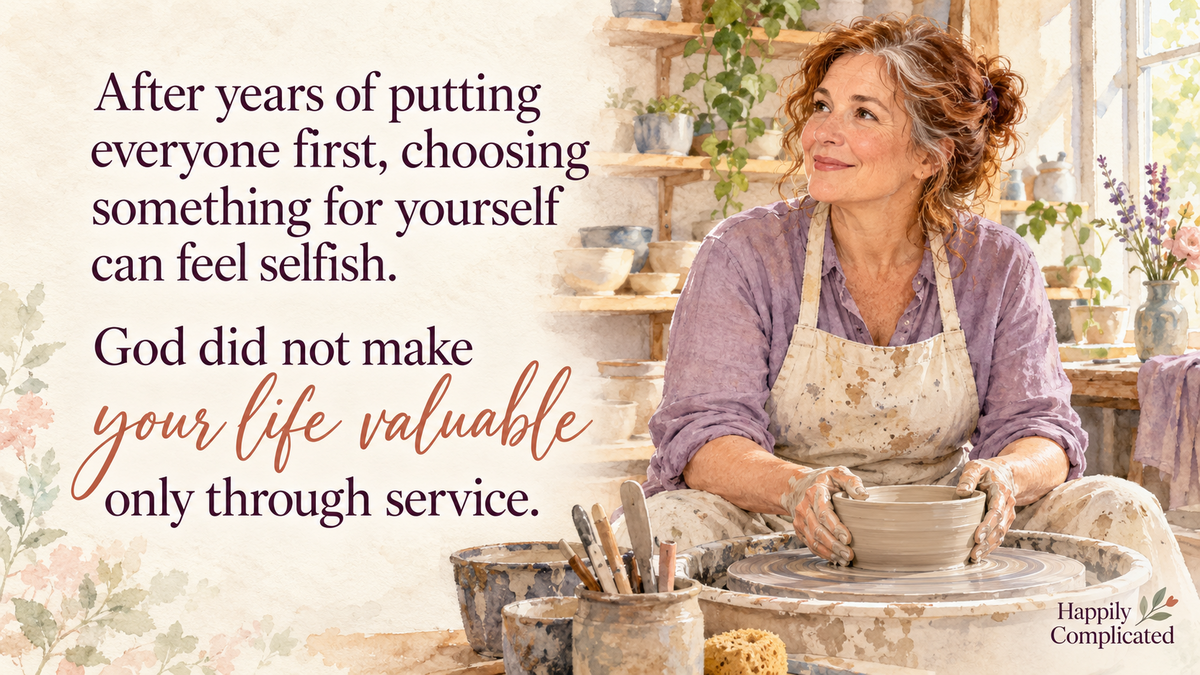
For years, your days may have been shaped by other people’s needs. Children needed rides. Parents needed appointments. Work needed one more answer. Church needed a dependable volunteer. Home needed meals, clean clothes, and someone who remembered what everyone else forgot.
You became good at being useful. You may even enjoy caring for people. But when a quiet opening finally appears and you choose something only because it interests you, guilt can arrive before joy has time to settle in.
You wonder whether the money should go somewhere else. You think about the task you could finish instead. You hear an old voice saying that responsible women do not spend time on themselves.
That voice may be familiar, but it is not the whole truth. God did not make your life valuable only when it is serving someone else.
Usefulness is not your identity
Being needed can feel safe. It gives the day a clear purpose and often brings appreciation, even if no one says thank you out loud. When people depend on you, there is little time to ask what you enjoy, what you miss, or who you are becoming.
Over time, usefulness can begin to feel like identity. If no one needs your help for an afternoon, you may feel restless or unnecessary. A hobby, class, walk, or quiet hour can seem less important than anything that produces a visible result for another person.
But your worth began before today’s list. You are loved by God as a whole person, not hired by Him as an unpaid machine. Service can be part of a faithful life without becoming the only proof that your life matters.
Guilt is not always guidance
Some guilt points toward something that needs repair. If you ignored a promise or acted without care, guilt may help you take responsibility. But guilt can also be an old habit. It can appear simply because you made a choice your family was not used to seeing.
Before canceling the class, putting back the book, or giving away the hour, ask what the guilt is actually saying. Did you neglect a real responsibility, or did you step outside a role that has always required you to come last?
Feelings deserve attention, but they do not have to make every decision. You can listen to guilt, examine it honestly, and decide that it does not get the final word.
Choose something that belongs only to you
A personal interest does not need to become a business, ministry, or gift for someone else. You can paint badly, grow one small garden, learn a language slowly, read a mystery, take photographs, bake something unnecessary, or walk a trail because you enjoy being there.
The activity does not have to improve your résumé or save anyone money. It does not have to be impressive enough to post. Its purpose may simply be to remind you that curiosity, play, beauty, and learning still belong in your life.
Start small if choosing yourself feels unfamiliar. Protect one hour. Spend within an amount that fits your real budget. Tell the people you live with when you will be unavailable. A clear plan can keep ordinary responsibility from swallowing the space before it begins.
Let other people adjust
Someone may be surprised when you are not immediately available. A family member may ask why you suddenly need this time. Their discomfort does not prove you are selfish. It may mean the family has grown used to your constant access.
You can be kind and clear: ‘I will help after my class,’ or ‘I have plans that afternoon.’ You do not have to make your interest sound important enough to earn permission.
Healthy relationships can adjust. Other capable people can solve small problems, wait for an answer, or share work that once landed automatically in your hands. Their growth may begin where your immediate rescue ends.
Receive joy without defending it
Joy can feel vulnerable after a long season of duty. You may be tempted to explain why you deserve it or promise that it will not interfere with anyone else. Try receiving the good moment without building a case.
Thank God for the mind that is still curious, the hands that can make something, the body that can notice beauty, or the friend who invited you. Gratitude does not turn a hobby into a spiritual assignment. It simply recognizes that ordinary enjoyment can be part of a human life.
You will still care for people. You will still keep promises and respond to real needs. But you can do those things as a whole woman, not as a woman slowly disappearing behind everything she does for others.
After years of putting everyone first, choosing something for yourself can feel selfish. Let the guilt speak, examine it with wisdom, and make room for the life God gave you too.