Loneliness & Belonging
When Being Left Out Still Hurts
Being excluded can hurt at any age. One closed circle does not get to decide your worth, your welcome, or where you belong.
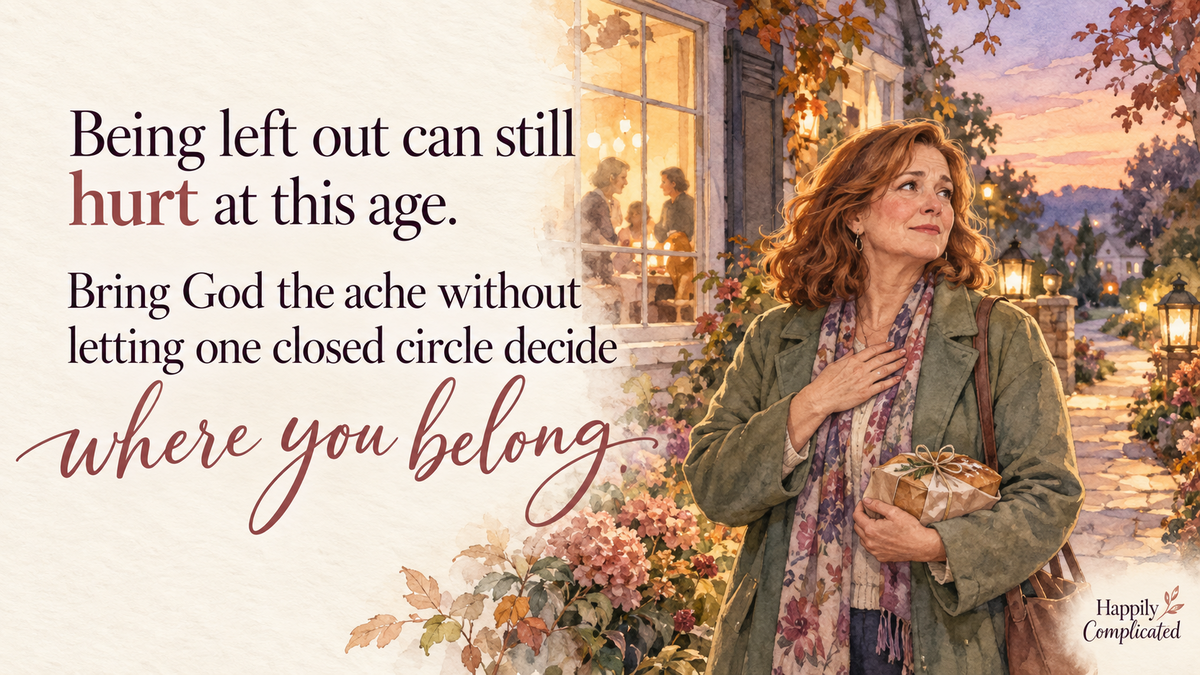
Being left out can feel strangely embarrassing as an adult. You may tell yourself that invitations should not matter anymore. You have responsibilities, perspective, and a full life. Still, seeing the gathering you were not invited to can make your heart drop.
Maybe the photographs appeared online. Maybe coworkers made plans in front of you. Maybe women you considered friends built a smaller circle and did not include you. The ache is real even when you wish it were not.
Growing older does not remove the need to belong. It only makes some forms of exclusion quieter.
Do not shame yourself for caring
You may try to protect yourself by acting as if the event was silly or the people never mattered. That response can offer quick relief, but it may also keep you from admitting what actually hurt.
Try naming the loss plainly: I wanted to be included. I thought this friendship was closer. I feel embarrassed that I care this much. Honest words are not dramatic. They give your heart somewhere safe to stand.
Bring those words to God without cleaning them up. He does not need you to pretend that rejection feels small. Prayer can hold disappointment before you know what to do with it.
One circle cannot measure your worth
Exclusion often creates a larger story in the mind. If these people did not invite me, perhaps nobody wants me. Perhaps I am difficult, boring, too old, too quiet, or too much.
Pause before one event becomes a verdict. You may need to examine a relationship honestly, but you do not need to turn uncertainty into proof that something is wrong with you.
A closed circle may reflect many things: limited space, changing friendships, poor communication, carelessness, or a choice that truly was unkind. Whatever the reason, that group does not hold authority over your value.
Choose a response that protects your dignity
When you feel hurt, the urge to react can be strong. You may want to send a sharp message, post something indirect, or withdraw from everyone before anyone else can disappoint you.
Give the first wave of emotion time to settle. Talk with one trustworthy person who will listen without turning the situation into gossip. Then decide whether the relationship deserves a calm question.
You might say, ‘I realized I felt hurt when I learned about the gathering. I had understood our friendship differently, and I wanted to be honest.’ Their response will tell you something. A caring person may explain, apologize, or make room for a real conversation. A dismissive response may show that your energy belongs elsewhere.
Make room for mutual belonging
Not every circle will open, and not every friendship will return to what it was. Grieving that truth is healthier than chasing people who only make room when you do all the work.
Look for relationships where interest moves in both directions. Notice the woman who remembers your name, answers with warmth, or seems relieved when you sit beside her. Mutual friendship often begins with small repeated moments, not instant closeness.
You can also become the person who notices who is standing alone. Inclusion does not erase your own hurt, but it keeps pain from making your heart smaller.
Let belonging grow beyond one room
Your place in the world is larger than one invitation list. You are a neighbor, friend, sister, daughter, coworker, church member, or steady presence in ways you may not fully see.
Ask God to guide you toward people who practice welcome with honesty and care. Ask for courage to reach out without begging for approval, and wisdom to recognize when a relationship has become one-sided.
Being left out can still hurt at this age. Let yourself grieve what happened. Then remember that one closed circle cannot decide where you belong or keep you from finding a table where your presence is received with joy.