Home, Money & Practical Grace
When a Home Repair Is More Than You Can Afford
An unaffordable repair can make a home feel frightening and shame feel personal. Begin with safety, clear information, and the next workable step.
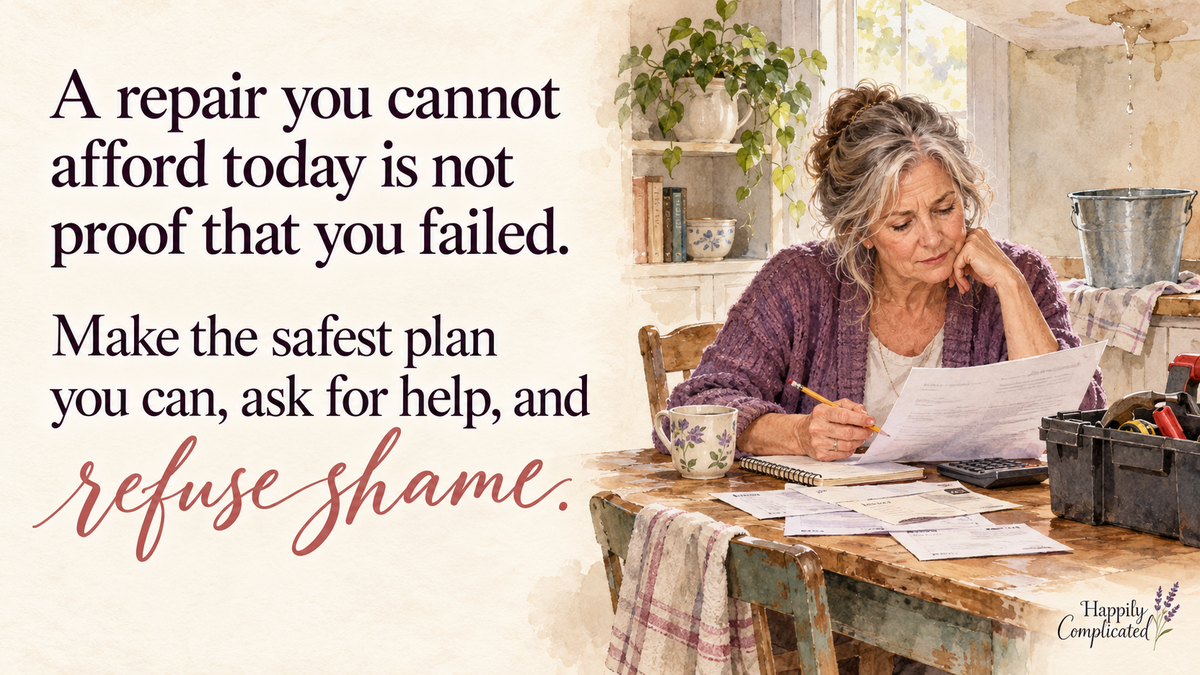
A stain appears on the ceiling. The furnace makes a new sound. A contractor gives you a number that is nowhere near the money available. Suddenly the house that usually shelters you becomes a source of fear.
Home repairs can carry a special kind of shame. You may think a responsible adult should have more savings, understand every system, or fix the problem before anyone notices. Real households are not that simple. Income changes, caregiving costs rise, and several needs can arrive at once.
A repair you cannot afford today is not proof that you failed. Begin with safety, gather clear information, and take the next workable step.
Deal with immediate safety first
Not every repair has the same urgency. A cosmetic crack is different from exposed wiring, a gas smell, flooding, or a structural concern. If there may be immediate danger, leave the affected area and contact the appropriate emergency service, utility, or qualified professional. Do not attempt a repair that requires training you do not have.
For a problem that is not an emergency, ask a reputable professional what must be handled now and what can safely wait. Request the answer in plain language. A temporary measure may reduce damage while you plan, but make sure it is truly safe rather than relying on a hurried guess.
The first goal is not to solve the whole house. It is to protect people and prevent avoidable harm.
Separate the repair from the shame
A broken appliance or leaking roof can feel like a report on your competence. It is not. Homes age. Weather happens. Materials wear out. Even careful people face expenses they could not predict or fully fund.
Try replacing the thought, 'I should have prevented this,' with a more useful question: 'What information do I need to make the safest decision now?'
That shift does not make money appear. It does make room for clearer thinking. Shame urges secrecy and rushed decisions. Good information gives you choices.
Get the problem and price in writing
When time allows, seek more than one written estimate from qualified, reputable contractors. Ask each person to explain the cause, the proposed work, materials, timing, warranty, and payment schedule. Confirm licensing and insurance requirements through the proper state or local source.
A lower price is not always the safer choice, and a higher price does not automatically mean better work. Compare the scope, not only the final number. Be cautious if someone pressures you to decide immediately, requests an unusually large cash payment, refuses a written agreement, or appears at your door after a storm with promises that sound too easy.
Keep estimates, photographs, receipts, and notes together. Paperwork will not remove the expense, but it can protect you from confusion later.
Ask about every trustworthy form of help
Tell the contractor honestly that the full cost is beyond your current budget. Ask whether the work can be completed safely in stages or whether a payment plan is available. Do not agree to terms you do not understand or payments that will threaten essentials such as food, medicine, utilities, or housing.
Local governments, utility companies, housing nonprofits, aging agencies, disability organizations, and community groups may offer repair grants, weatherization help, low-cost loans, or vetted volunteer programs. Eligibility and availability vary, so use official contacts and ask what documents are required.
A church may not be able to pay the entire bill, but someone may help you call programs, compare estimates, move furniture, or find a trustworthy professional. Asking for practical help is not the same as asking someone else to carry your whole life.
Borrow slowly, not from panic
Urgency can make expensive financing look like the only door. Before using a credit card, home-equity product, or contractor financing, read the interest rate, fees, total repayment, and consequences of missing a payment. A qualified nonprofit financial counselor can help you understand options without selling a loan.
Avoid signing because you feel embarrassed in front of the person waiting for an answer. It is reasonable to say, 'I need time to review this.' A serious commitment deserves a clear head.
Your worth is not measured by the condition of the house
Faith does not promise that every repair will be funded quickly. It gives you a place to bring fear while you make honest decisions. Ask God for wisdom, trustworthy people, and courage to face the numbers without letting them name you.
Make the safest plan you can. Ask the next question. Accept appropriate help. Let the repair be a repair, not a verdict on your character.
Your home may need work. You may need time. Neither truth makes you a failure, and neither removes your dignity.