Friendship, Grief & Grace
When a Friendship Fades Without a Villain
Some friendships end through distance, change, or accumulated silence. The loss can be real even when neither woman meant to cause harm.
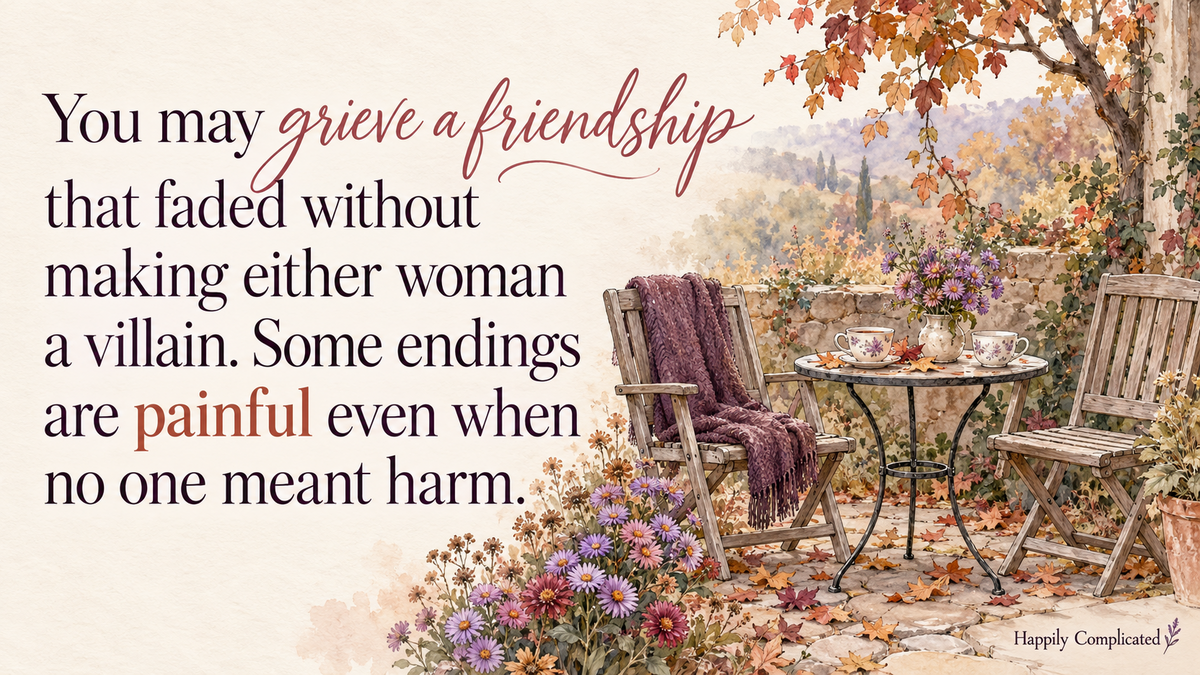
Not every friendship ends with a betrayal or one terrible conversation. Sometimes the calls become less frequent. Schedules stop matching. One woman moves, begins caregiving, changes churches, or enters a season the other does not know how to join. A few missed invitations slowly become a quiet distance.
That kind of ending can be difficult to explain because there is no clear person to blame. You may wonder whether you are allowed to feel hurt when no one did anything dramatic. You are. A friendship can matter deeply and still fade without a villain.
Grief does not require a courtroom. It needs honesty about what was good, what changed, and what you can no longer force back into its old shape.
Name the loss without making it a trial
You may miss the woman herself, but you may also miss the season you shared. Perhaps she knew your children when they were small, sat beside you during a hard year, or understood a version of you that few people remember now.
Try naming what you miss with specific words. You might write, 'I miss having someone who knew the whole story,' or, 'I miss the ease we once had.' Clear grief is gentler than a long case built from every unanswered message.
You can acknowledge moments that hurt without turning the entire friendship into a mistake. The good was real. The disappointment may be real too. Mature grief can hold both.
Resist the need to choose one guilty person
Pain often looks for a simple explanation. You may decide she never cared, or you may make yourself responsible for every mile that grew between you. Neither story may be complete.
Friendships live inside changing lives. Energy, health, marriage, work, family duties, money, and emotional capacity can all shape how much a person can offer. Understanding those pressures does not erase hurt. It keeps hurt from becoming a harsh judgment about another woman's whole character or your own worth.
If there was clear cruelty, manipulation, or repeated disrespect, wise boundaries still matter. Refusing blame does not require denying harm. It simply means telling the truth without adding what you cannot know.
Decide whether a gentle reach is still wise
Some friendships need one honest invitation. A simple message can say, 'I have missed you. If you have room, I would enjoy talking.' Keep it warm and free of accusation.
Then let the response give you information. If she welcomes contact, begin smaller than the friendship used to be. A short call or occasional coffee may be the honest shape of the relationship now. Do not demand immediate closeness as proof that the past mattered.
If she does not respond, repeatedly cancels without suggesting another time, or clearly asks for distance, respect what is present. Reaching out once can be loving. Chasing someone until she returns your hope is not required.
Let yourself miss what cannot be restored
You may feel the loss at birthdays, church gatherings, or ordinary afternoons when you would once have called her. Let the ache be an ache instead of turning it into an emergency you must solve.
Bring the friendship to God plainly. Thank Him for what it gave you. Tell Him what still hurts. Ask Him to protect you from bitterness and from the belief that one ending means every future friendship will leave.
Healing may include putting away old messages for a while, changing a routine, or speaking with one trustworthy person who will not turn the story into gossip. Grief needs care, not an audience collecting evidence.
Carry the love forward
A friendship that ended can still have shaped you well. You may keep the courage she encouraged, the recipe she taught you, or the kindness you learned beside her. Carrying those gifts does not mean pretending the ending did not hurt.
You are allowed to bless what was, release what is no longer mutual, and remain open to connection in the life you have now. Some endings are painful even when no one meant harm. That truth can make room for sorrow without hatred, gratitude without denial, and grace for two imperfect women whose paths no longer run together.