Family & Relationships
Honoring Family Without Repeating Harmful Patterns
Family history can hold both love and harm. Wisdom can preserve what gave life while changing patterns that should not continue.
Family stories are rarely simple. The same home may have given you laughter, faith, food, music, and people who showed up when it mattered. It may also have taught you to avoid conflict, hide pain, fear mistakes, or keep harmful secrets.
As an adult, you may begin noticing patterns that once felt normal. The sharp way people speak when they are stressed. The silence after someone causes harm. The belief that love means unlimited access, or that keeping peace matters more than telling the truth.
Seeing a pattern does not require you to reject your whole family. It does invite you to decide what should continue through you.
Love can tell the whole truth
Some people fear that naming family harm is disrespectful. They worry that honest words erase every sacrifice their parents or relatives made.
But two truths can share the same room. Someone may have loved you and still wounded you. A tradition may hold beauty and still carry fear. A parent may have done the best she knew and still passed down something that now needs to change.
Honesty does not have to become contempt. You can speak clearly without turning a complicated person into a villain. You can appreciate what was good without calling what hurt you acceptable.
Choose what you want to carry forward
Think about the parts of your family life that gave strength. Maybe people shared meals, cared for elders, prayed through hard times, worked with their hands, or made room for humor when money was tight.
Those gifts deserve to be remembered. Keep the recipes, stories, music, hospitality, faith, and practical wisdom that still give life.
Then name what should stop. Perhaps children were shamed instead of guided. Anger controlled the room. Women were expected to carry everything quietly. Apologies never came, and painful subjects were covered with jokes or Scripture.
You do not need to pass those habits forward simply because they are familiar.
Change becomes visible in ordinary moments
Breaking a pattern often looks less dramatic than people expect. It may mean lowering your voice when everyone else raises theirs. It may mean apologizing to your child, asking before giving advice, or allowing someone to say no without punishing her.
You may leave a conversation that has become cruel. You may seek wise counseling, set a limit, or stop asking the most vulnerable person to keep everyone comfortable.
These choices will not rewrite the past. They can change what the past is allowed to produce through you.
Expect some resistance
Families build routines around familiar roles. When the quiet person begins speaking, the fixer stops rescuing, or the peacekeeper allows honest tension, others may feel unsettled.
Their discomfort does not automatically mean you are dishonoring them. Still, examine your tone and actions. Change should not become permission to humiliate people or punish them for everything you endured.
Be clear. Be consistent. Make repair when you act carelessly. Let boundaries protect what is healthy rather than becoming weapons meant to cause pain.
Grace can grow something different
Changing a family pattern takes patience. Under stress, you may hear an old phrase come out of your own mouth or feel yourself reaching for the response you promised not to repeat.
Notice it. Take responsibility. Apologize without excuses, and practice the new response again. One setback does not make the work false.
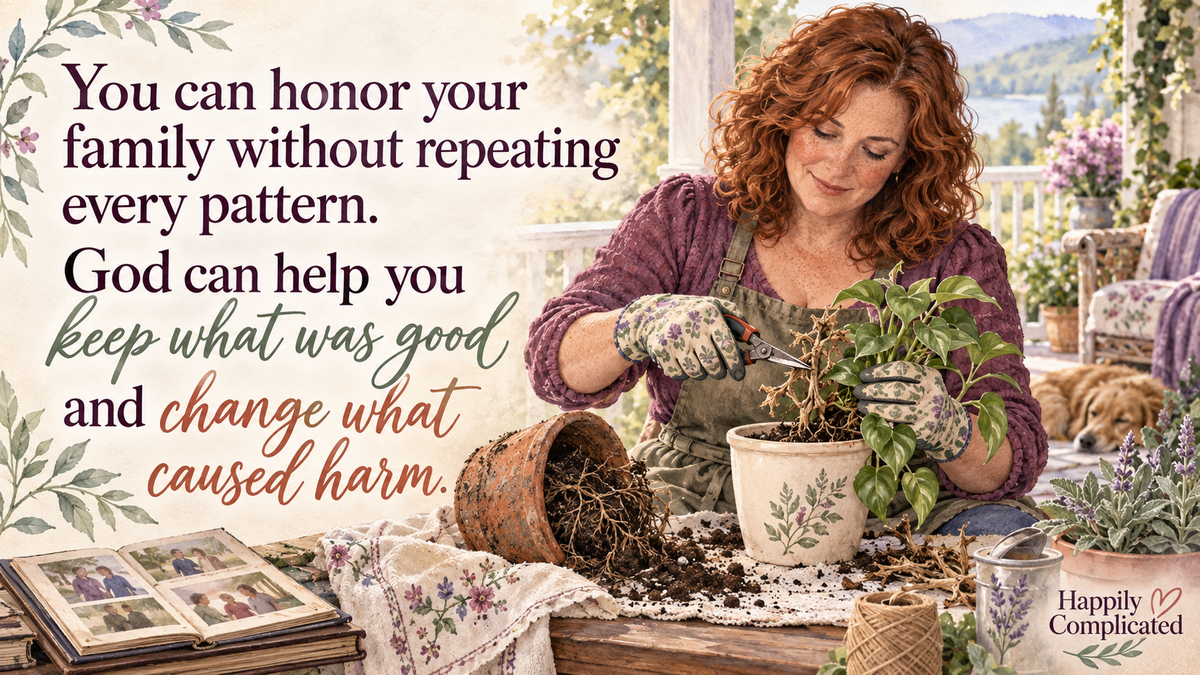
God can help you hold your history with open eyes. You can honor sacrifice, keep what was beautiful, and still refuse to hand pain to the next person.
Your family story shaped you, but it does not have to control every chapter that follows. Keep what gave life. Change what caused harm. Let grace become part of what your family receives from you now.