Women, Family & Culture
Girls Need Room to Stay in Sports
Women's sports are growing, but girls still need belonging, resources, and steady encouragement long before the professional spotlight arrives.
Women's sports are drawing larger audiences, more investment, and new professional opportunities. Recent reporting has also looked back at the long road that made this growth possible, from generations of women who were told competition was not feminine to athletes who kept asking for equal room to play.
The progress matters. So does the part of the story that happens far from television. A girl first decides whether sports belong to her in a school gym, neighborhood field, community pool, or driveway.
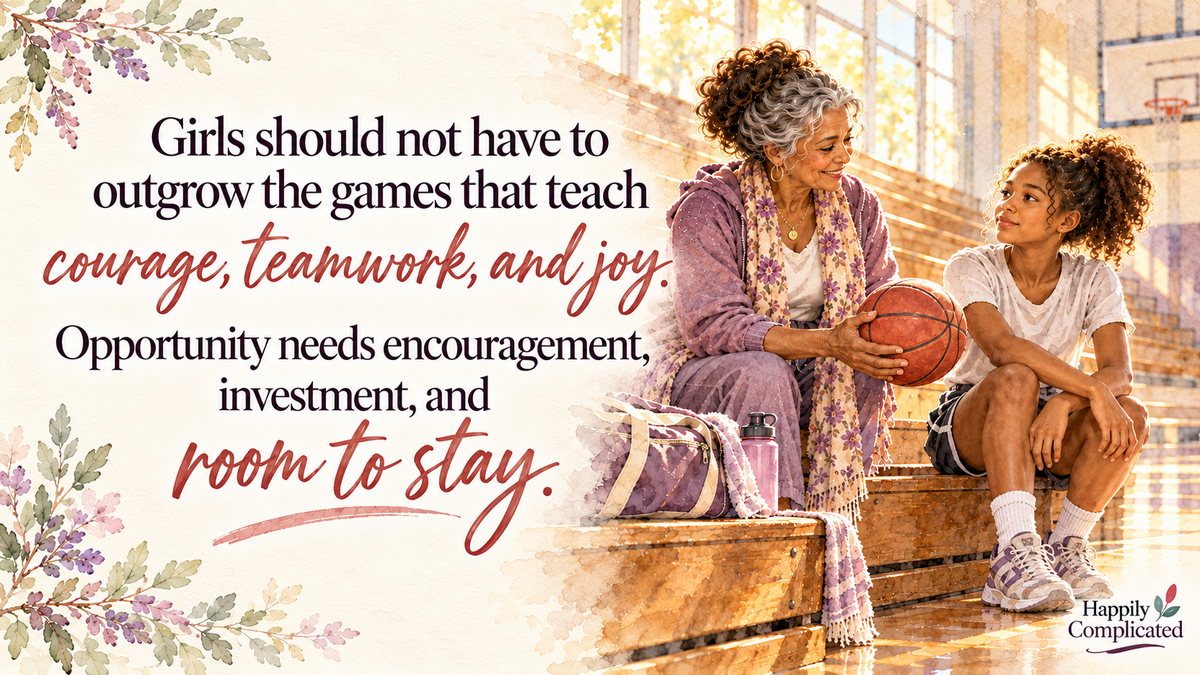
If we want women to thrive in sports, girls need more than permission to begin. They need encouragement, investment, and room to stay.
Belonging starts before achievement
Adults can become focused on results very quickly. We notice points, speed, wins, rankings, and scholarships. A girl may first need something simpler: a place where she is welcomed while learning.
She needs a coach who teaches without humiliating her, teammates who do not treat mistakes as proof she does not belong, and adults who value effort without making every game a test of the future.
Confidence grows when a child can be new, awkward, and improving without losing her place.
Pay attention when girls begin to leave
Girls may step away because of cost, transportation, body changes, social pressure, poor coaching, limited playing time, or the feeling that the space was built for someone else. The answer is not always to push harder.
Ask what changed. Listen without beginning with a lecture about commitment. A girl who wants to stop may need rest, a different team, a new sport, better equipment, or freedom from an environment that has become unkind.
Sometimes leaving is the right decision. The goal is not to keep every girl in one activity forever. It is to make sure she is not being quietly pushed out by a problem adults could address.
Investment is more than cheering
Families and communities show what they value through time and resources. Encouragement matters, but so do safe facilities, fair practice times, qualified coaches, reliable transportation, uniforms that fit, and fees families can manage.
A girls' team should not have to prove extraordinary success before receiving ordinary support. Equal opportunity becomes real through schedules, budgets, equipment, leadership, and attention.
When money is limited, communities can look for shared equipment, scholarships, carpools, volunteer support, and partnerships that lower barriers without shaming families who need help.
Let women and girls see one another
Visible athletes can widen a girl's imagination, but local examples matter too. A high school player helping at a youth clinic, a mother returning to a recreational league, or a grandmother showing up consistently can all say, 'Women belong here.'
Watch women's games together. Learn athletes' names. Celebrate skill without turning appearance into the main story. Let girls hear women discuss discipline, teamwork, disappointment, leadership, and joy.
They need examples of achievement, but they also need examples of women who play simply because movement and community are worth keeping.
Protect joy from becoming pressure
A child can love a sport and still need days when it is not the center of family life. Constant evaluation can turn a source of joy into another place where she fears disappointing adults.
Ask questions that leave room for her experience: 'What felt good today?' 'What was hard?' 'What would help next time?' Let her answer before offering instruction.
Her value does not rise with a win or fall with a mistake. Sports can shape courage and resilience, but they should not become the measure of who she is.
Make room for the next girl
The growth of women's sports did not appear on its own. Women kept playing, organizing, coaching, investing, and asking institutions to do better. That work continues wherever a girl wonders whether there is still a place for her after the excitement of beginning fades.
Encourage her. Listen to her. Help remove a real barrier when you can. Opportunity begins with an open door, but belonging is what helps a girl stay long enough to discover courage, teamwork, skill, and joy.
This reflection was inspired by reporting from Associated Press: America's evolving relationship with women's sports.