Creation Care
When Creation Care Takes Root
Gratitude for what God has made can reach all the way into the soil beneath us.
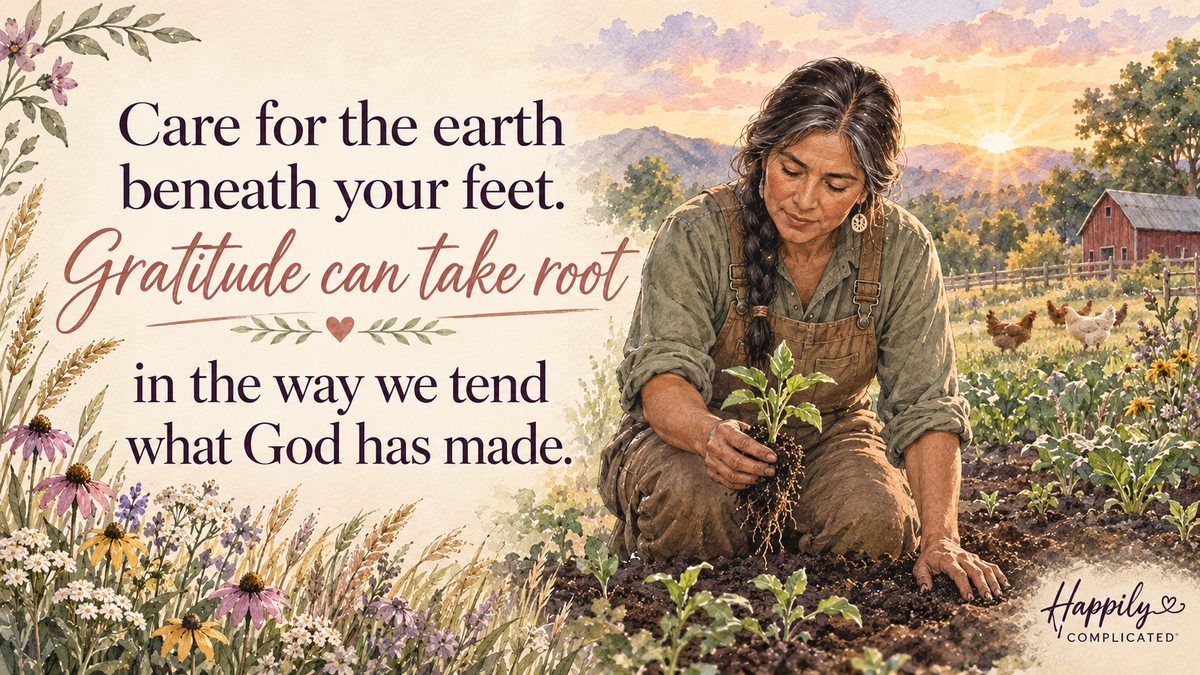
A growing group of Midwestern farmers is talking about soil in language that reaches beyond crop yields. Their work with regenerative agriculture is practical, but many also describe it as spiritual. Farmers, Indigenous leaders, and Catholic sisters are finding common ground in the belief that caring for land can also care for people, communities, and the inner life.
Faith that reaches the ground
Christian faith can become so focused on thoughts and words that we forget how physical the Bible is. Scripture begins in a garden. Genesis 2 describes humanity being placed there to work it and care for it. Jesus taught beside fields, spoke about seeds, and used bread and water to explain spiritual truth. The ground beneath us was never outside God's concern.
Creation care does not ask us to worship nature. It asks us to remember who made it and who owns it. Psalm 24 begins by declaring that the earth belongs to the Lord. If something belongs to God, our use of it deserves humility. Gratitude becomes more than a feeling when it changes the way we handle what has been placed in our care.
What regenerative farming is trying to do
Regenerative agriculture is a broad term, and practices differ from farm to farm. It often includes keeping soil covered, disturbing it less, planting a wider mix of crops, supporting living roots, and using animals carefully within the land's natural cycles. The goal is to build healthier soil and a more resilient farm over time rather than treating the ground as an endless resource.
The recent reporting from the Midwest shows that this work is also building relationships. People with different histories and traditions are learning from one another. Some bring generations of Indigenous knowledge. Others bring experience from conventional agriculture or religious communities that have held land for many years. Their agreement is not perfect, yet they share a desire to leave the ground more alive than they found it.
Stewardship without perfection
Most of us do not own a farm. We may rent an apartment, shop within a tight budget, or have no control over how our food is produced. Creation care should not become another place for shame. Faithful stewardship begins with the choices actually available to us. Small actions still teach the heart to pay attention.
You might grow herbs near a window, waste less food, support a local farmer when the budget allows, repair something before replacing it, or learn where one regular purchase comes from. You might help a church garden, compost with a neighbor, or simply stop treating every disposable object as if it disappears when it leaves the house. None of these acts makes a person morally superior. They are ways of practicing care.
The spiritual work of tending
Tending requires patience because living things do not obey our preferred schedule. Seeds stay hidden before they rise. Soil improves slowly. Weather can undo careful plans. This work can teach us to respect limits and receive dependence as part of life. We need rain, healthy ground, pollinators, farmers, transport workers, and many hands we will never see.
The next time you prepare a meal, pause before rushing past its ordinary wonder. Food came from somewhere. Someone planted, harvested, packed, carried, and prepared it. Thank God for the gift, then ask what care looks like within your real life. Gratitude takes root when thanks becomes attention, and attention becomes a more faithful way of living on God's earth.
This reflection was inspired by reporting from Associated Press: Regenerative agriculture and spirituality in the Midwest.