Ordinary Life & Faith
Cooking for One Is Still Worth the Care
A table set for one is still worth tending. Simple food, a few unhurried minutes, and ordinary gratitude can become meaningful acts of care.
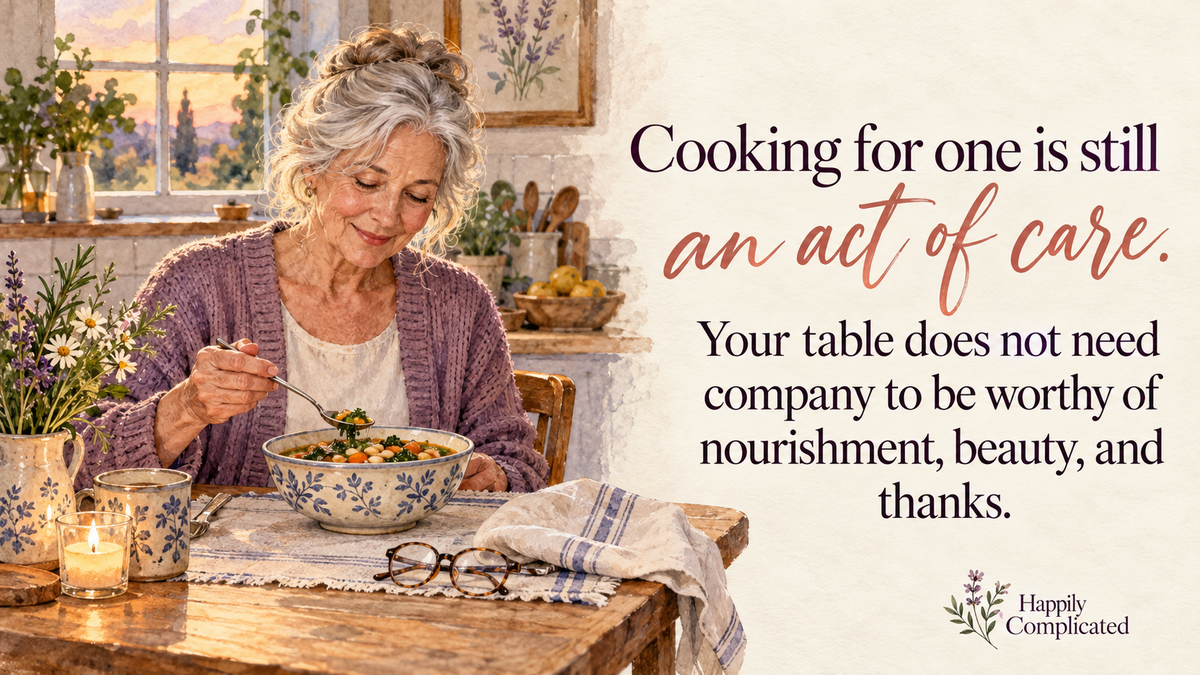
Cooking can change when the house becomes quieter. Children grow up. A marriage ends. A spouse dies. A roommate moves. Work schedules shift. Or perhaps you have lived alone for years and still find it difficult to believe a meal for one deserves much effort.
It can feel easier to stand at the counter, eat from the package, or skip the meal until hunger makes every choice harder. There is no shame in simple food or an occasional night when dinner is whatever works. But your care does not become less important because no one else is coming to the table.
Cooking for one is not a performance. It can be a quiet way of honoring the life God has placed in your hands today.
Notice the story beneath the empty chair
A single place setting can stir more than hunger. It may remind you of the years when the table was crowded, the person whose chair is now empty, or the future you expected to share with someone. Food carries memory, and ordinary meals can reveal grief that stayed hidden during a busy day.
You do not have to turn every dinner into a lesson about gratitude. If the quiet hurts, name it. Pray honestly. Call someone when you need a familiar voice. Let the sadness be real without using it as proof that your present life is incomplete.
Your table can hold memory and still serve the woman sitting there now.
Make care small enough to practice
A meaningful meal does not need many ingredients, expensive cookware, or an hour of preparation. Eggs and toast, soup with fruit, a baked potato, or leftovers warmed carefully can be enough. The goal is not to impress yourself. It is to respond to a basic need with attention instead of neglect.
Keep a short list of meals that work well in small portions. Freeze extra servings when that helps. Buy a few ingredients you truly enjoy instead of filling the kitchen with food you think a proper household should have.
On low-energy days, choose ease without speaking cruelly to yourself. Prepared food, a sandwich, or something from the freezer can still be care. Faithfulness often looks less polished than the pictures people share.
Let the table feel like yours
You do not need company to use the good bowl, the cloth napkin, or the chair near the window. Beauty is not wasted because only one person sees it. A flower from the yard, soft music, or a cleared corner of the table can help the meal feel like part of life rather than a task to finish quickly.
This does not mean every plate must be beautiful. It means you are allowed to create a small amount of welcome for yourself. Women often save their best effort for guests while living on scraps of time and attention when alone.
Set down the phone for a few minutes if you can. Sit instead of hovering near the sink. Taste what you made. These small choices say, ‘My life is happening now, and I am present for it.’
Receive food with gratitude, not pressure
Gratitude does not require a perfect diet or a cheerful mood. It may be as simple as thanking God that there is food available, that your hands prepared it, or that someone else made the meal on a day you could not.
If food carries fear, shame, or medical concerns, wise support from a qualified professional may be helpful. Spiritual encouragement should never replace care that belongs with a doctor or registered dietitian. Asking for guidance can be a responsible way to tend the body you have.
For an ordinary evening, let thanks remain ordinary. ‘Lord, thank You for this meal and for meeting me here’ is enough. You do not need a crowded room for God’s presence to be real.
Make room for shared meals too
Cooking for one does not mean you must eat alone all the time. Invite a friend when you want company. Trade meals with a neighbor. Join a church supper, community class, or family table without apologizing for arriving by yourself.
Connection and solitude can both belong in a healthy life. One meal may be shared and noisy. The next may be quiet. Neither one determines your worth.
If you miss caring for others through food, make one extra portion for someone who would receive it gladly. Let generosity be a choice, not proof that a meal matters only when another person benefits.
Your table does not need an audience to be worthy of nourishment, beauty, and thanks. Make the care simple. Receive what is good. Let one place setting remind you that your life is still worthy of being tended.